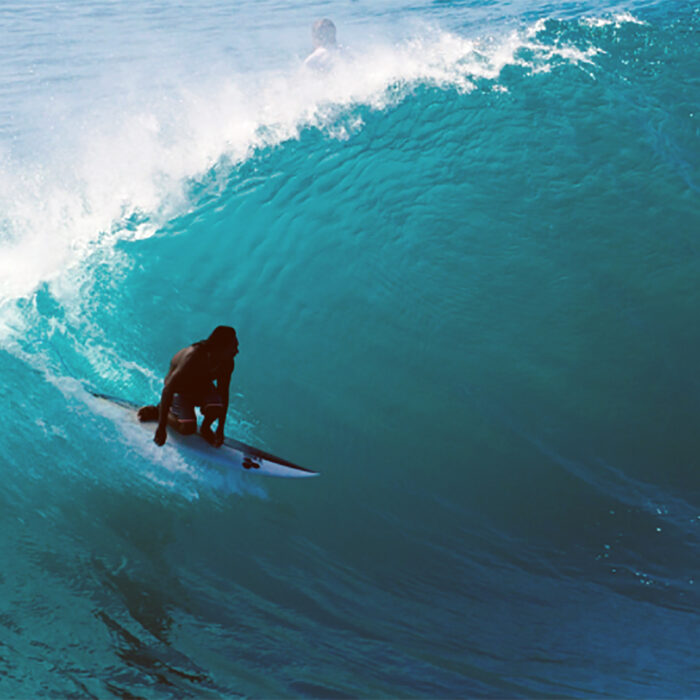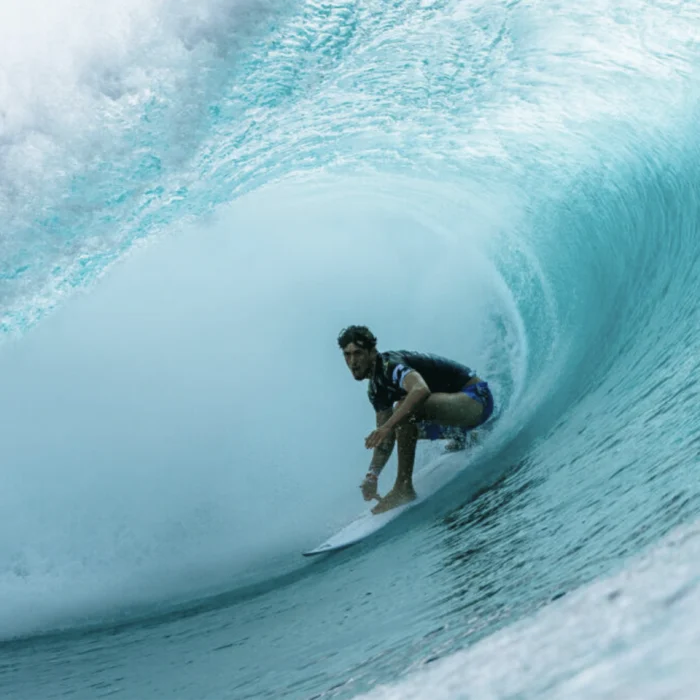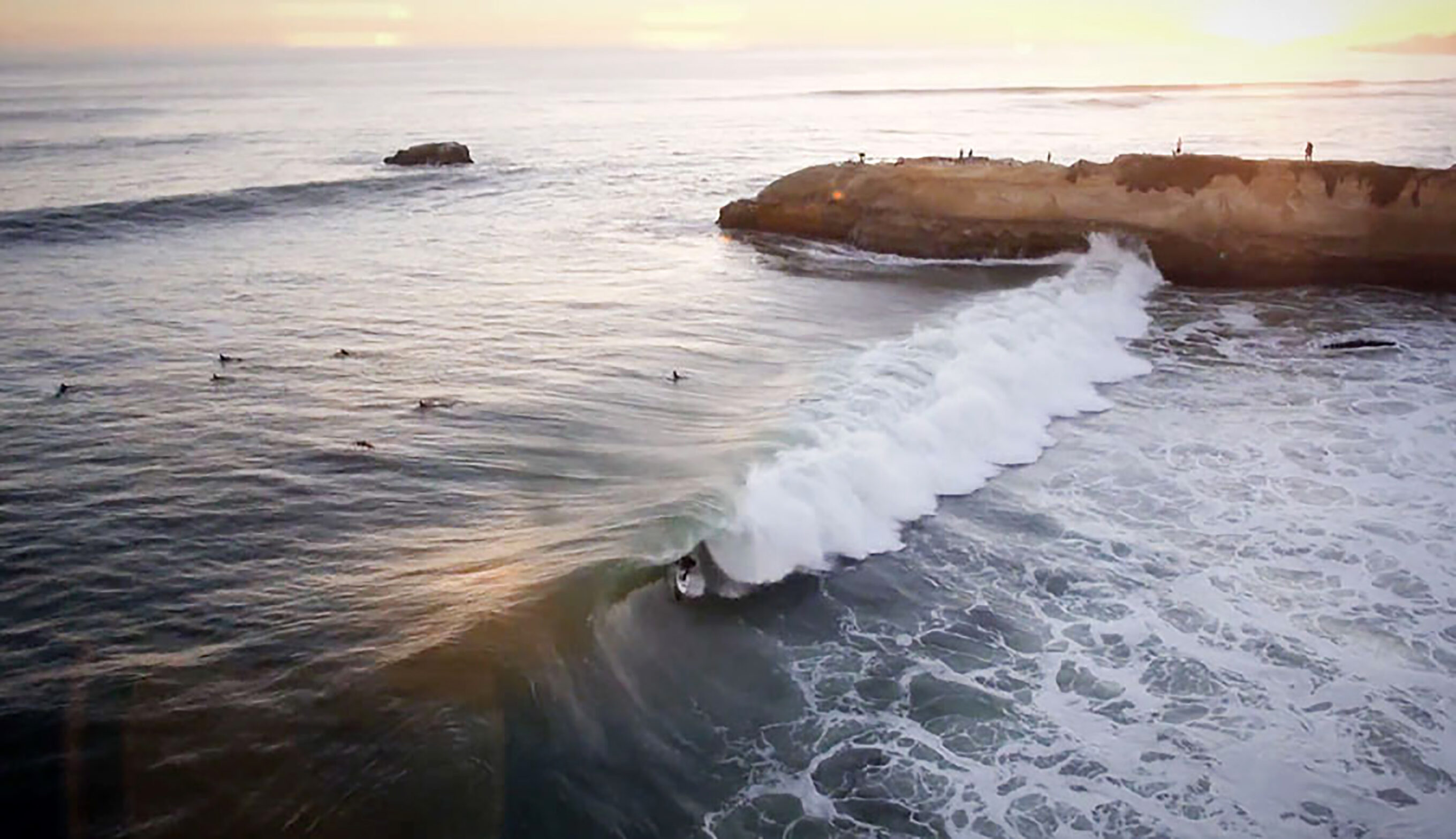
Shaun Burns is one of Santa Cruz, California’s most well-respected surfers. He’s a Qualifying Series warrior and has put his time in on the competitive grind. But he’s also graduated from Cal Poly San Luis Obispo with an Environmental Management degree and has put it to good use in his home town.
Santa Cruz is feeling the effects of beach erosion as much as any city on the West Coast. The iconic Steamer Lane has recently seen giant chunks of rock fall from the cliff face, changing the wave for good. We spoke with Shaun about what’s being done to save one of California’s most famous surf spots.
First, tell us a little about your surfing.
My career was a little different. I attended Cal Poly right after high school and graduated in 2015. I became a sponsored athlete for O’Neill during my time there in 2011 and have been riding with them ever since. For the first five years after college, I traveled internationally on the WQS. I’m not sure if I would do it now, but I really enjoyed traveling around the world. I earned a couple of second-place finishes, including in Nias and at the Cold Water Classic here in Santa Cruz.
So what exactly is an Environmental Manager?
My degree allowed me to enter the environmental field and work in ocean and surfing conservation with the nonprofit Save The Waves, which is based here in Santa Cruz but works around the world through World Surfing Reserves and Surf Protected Areas. There are 14 World Surfing Reserves, and one of them is here in Santa Cruz, which serves as our learning laboratory. I work with a local coalition of partners, including people from O’Neill and other environmental nonprofits like Surfrider. I act as a middleman between the surf community and the local government, making sure that when coastal planning is being discussed, surfing and surfers have a voice at the table. We want to ensure that surf breaks and other surfing resources — including the ocean, beaches, coastline, and waves — are not only discussed but also prioritized in coastal planning. In the past, that voice was often missing, and these resources were overlooked for a long time.
We’ve also conducted studies here in Santa Cruz, including Surfonomics and climate vulnerability studies. These studies have shown the amount of economic revenue surfing generates in Santa Cruz, which is around $107 million. We’ve also looked into how projected sea-level rise will affect surfability at each of the approximately 32 surf breaks in Santa Cruz. We examine how surfability at these breaks may diminish and which adaptation scenarios would be best for preserving surfable conditions, keeping people surfing, and encouraging people to continue visiting Santa Cruz and contributing to the city’s economy.
Let’s talk climate change and surfing. What are the issues and impacts? Are there any positives?
Surfing right now feels like it exists in a completely different environment and climate than it did just 10 years ago. Even in my lifetime, growing up here in Santa Cruz, I’ve seen waves go extinct. There’s a place called Finger Bowl where I grew up boogie boarding and probably had some of my first experiences getting barreled. That wave no longer exists. People don’t boogie board or surf there anymore, and it’s almost no longer a beach because it has far less sand. There also isn’t much of a wave breaking off the cliff anymore because of those changes.
Erosion at Steamer Lane has also altered the wave dramatically. You can’t take off where you used to get that slingshot effect. It was one of the premier spots to take off, learn your airs, and practice them. That opportunity is no longer available for groms learning on small days at the Lane. The past few winters in Santa Cruz have also been pretty brutal. We’ve experienced bomb cyclones, huge chunks of the cliff coming down at the Lane, and about 100 feet of the Santa Cruz Municipal Wharf breaking off. West Cliff Drive was closed for about a year. You can see similar issues in places up and down the coast, including San Clemente, San Onofre, and Oceanside. The trail at San Onofre was eroded, while San Clemente and Oceanside are grappling with sand loss and determining how to restore their beaches. We’re facing a climate crisis that is altering surf breaks, which is why I think it’s important for surfers to speak up and have a seat at the table when policymakers are planning for the future of the California coastline.
It’s a scary time, especially with a supercharged El Niño expected to hit the California coastline this winter, which they’re saying could be the biggest since the winter of 1982–83. There are going to be a lot of changes, and I think we all need to be prepared and look at what we need to do in the face of an emergency. We need to prepare for these changes as best as we can.
Tell us more about the Lane. Any predictions on how it will affect the surf? Will we see these issues across the state and the globe?
The erosion at the Lane right now is pretty crazy. Within just the last two years, car-sized boulders have fallen from the cliff directly into the surf zone. The takeoff zone has completely changed. At high tide, you can no longer sit right up against the cliff, and, as I mentioned, you don’t get that slingshot effect that surfers love — that speed boost when taking off.
Now, you have to take off farther away from the cliff. The changes have also caused more refraction and created more warble in the waves. We’re used to that in Santa Cruz, but surfers want clean waves. The Lane is just one example of waves changing dramatically.
I’m scared that this winter is going to be bad for the Lane. Even this summer, with the El Niño conditions we’re already experiencing and south swells slamming against the cliff, the erosion has continued. If the next chunk comes down along what locals call the “West Side fault line,” it could make the takeoff spot even worse and push it farther away from the cliff, potentially creating less surfability and fewer waves on offer there. Ultimately, it depends on how that next huge chunk of the cliff falls.
How have you been working to address these issues?
Right now, I’m working with the City, which has approved a $300,000 project to survey the cave erosion extending from Steamer Lane toward Its Beach. The cave is actually reaching underneath the Steamer Lane Lighthouse, so there have been discussions about relocating the lighthouse to the other side of West Cliff Drive.
We’re also working with the city, county, and Coastal Commission. There are so many different players involved, including the Monterey Bay National Marine Sanctuary, which makes conservation difficult and implementing anything almost impossible because of the number of approvals required.
Right now, I’m working with the City and County of Santa Cruz to come up with a hybrid approach and solution for Steamer Lane and West Cliff. We’re looking at options such as sand replenishment, restoring natural features, and hard armoring. For the past 20 years, coastal adaptation has often been treated as black or white — either managed retreat or hard armoring. I’m trying to work with all the active stakeholders and policymakers to develop a hybrid solution.
I think Santa Cruz, with the World Surfing Reserve and the learning laboratory we use here, is the perfect place to come up with something new and creative, similar to what they’re looking at in Oceanside through Re:Beach. I would love to see a pilot project involving sand nourishment or something similar, and we’re trying to bring those ideas to the city’s attention.
That’s also why it’s so important for the city to hear directly from surfers and other ocean stakeholders. We’re in the water, seeing these changes firsthand and seeing how coastal armoring, managed retreat, or natural restoration could affect the waves and our surfing resources. Keeping the waves surfable keeps people surfing and coming to town, which helps drive the city’s economy.
View this post on Instagram
What can surfers do to battle these issues on a personal level and on a civic level?
I think the best thing local surfers can do for their surf breaks is educate themselves about the effects of climate change and the changes happening along the coast. That includes understanding what happens when a cliff is hard-armored and how changes to the landscape affect the coastline. Surfers need to become more aware, stand up, and be part of the solution.
Whether it’s attending local municipal meetings or city council hearings, it’s important to let officials know what is happening at your local beach or coastline and to be part of the process. For a long time, surfers haven’t really been involved, but with the coastline changing so much, I think it’s time for all of us to stand up, work together, and show everyone how valuable surfing is to the state.
Surfing is California’s state sport, and the economics of surfing in California are huge. When it comes to propositions and voting, I think the state needs to dedicate more resources to protecting the coastline and keeping the ocean healthy and thriving. Offshore drilling is a threat to the marine environment, and kelp beds are deteriorating in some areas of California. The ocean, clean beaches, and waves are central to California’s culture, and I think surfers need to start speaking up to protect them.
Surfers can sometimes be selfish. I’ll admit that I can be selfish too — I just want to ride my waves and leave. But through my work, I’ve been trying to activate more surfers here. They’ve been attending meetings, giving input to the city, and making sure they’re communicating. That’s one of the biggest things I think we can do. We also currently have a survey about changes to wave quality at Steamer Lane. Completing something as simple as that helps us collect more data. The more data and numbers we can give the city and local municipalities, the better they can use that hard data to make decisions.
Building a coalition, such as a World Surfing Reserve, is also important. When the World Surfing Reserve and Save The Waves speak with policymakers and local government, it carries more weight than one or two surfers speaking individually. Those individual voices still matter, but coming together through a Board Riders club, a local nonprofit like Surfrider, or an organization like the World Surfing Reserve carries a lot of weight. When you bring surfers, scientists, professors, business owners, and other stakeholders together as a coalition, you can make your voice heard.