
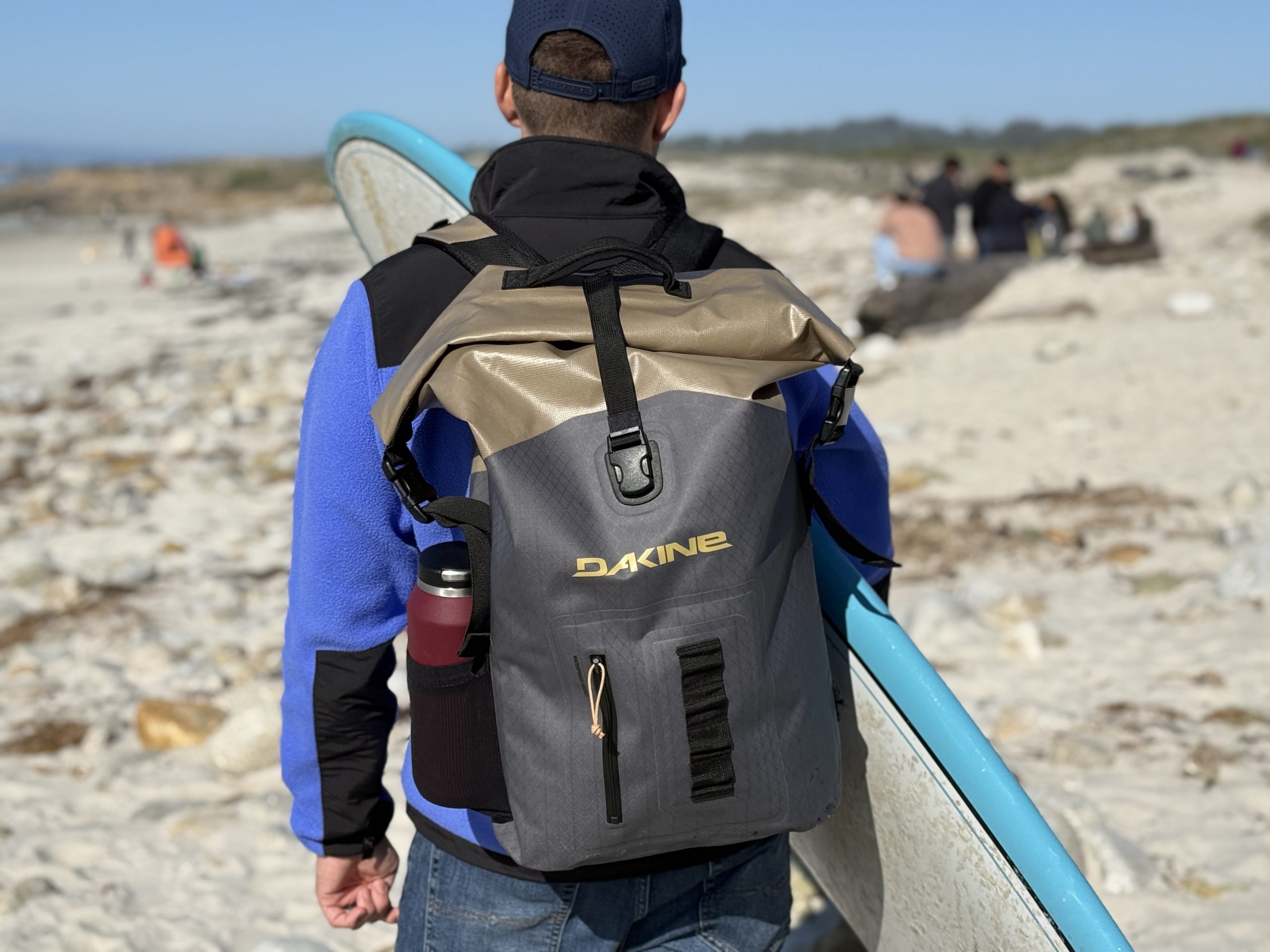
The Dakine Cyclone LT Wet/Dry Rolltop Pack. Photo: Rebecca Parsons//The Inertia

No one likes dealing with a wet wetsuit. There’s a time and a place for a wet wetsuit, and that’s in the lineup and only in the lineup. There’s nothing worse than a thoroughly soaked wetsuit stinking up your car or dampening the interior of your vehicle. I’ve found that a reliable surf backpack is not only a good solution for transporting your surf gear but is also the perfect solution to dealing with a wet wetsuit, swimsuit, booties, or anything else you’d prefer to stay away from the rest of your belongings.
I’ve been surfing for over a decade and have tested my fair share of surf backpacks. I’ve been living on Oahu for the past few years and haven’t had to deal with a wetsuit. Recently, I began splitting my time between Santa Cruz, California, and Hawaii and was in need of somewhere to stow my wetsuit and other surf gear. After doing some research, I opted for the Dakine Cyclone Wet/Dry 34L Rolltop Pack. When it arrived, I was pleased with the aesthetic and thought it looked plenty spacious for stashing all of my gear — I was eager to see if it would fit my needs.
I put this pack to the test surfing wintertime swell in Santa Cruz County. I used the Cyclone to store my wetsuit and accessories on the drive to and from the beach, and also wore it when walking to the beach. Because it’s spacious, waterproof, and comfortably padded, the Cyclone is a great option for storing and transporting all of your surf gear.
Related: Best Surf Backpacks | Best Travel Backpacks
| Pros | Cons |
| Padded shoulder straps/back panel | Pricey |
| Waterproof construction | Not many separate compartments |
| Spacious (34 L) |
Putting the Dakine Cyclone to the Test in Santa Cruz
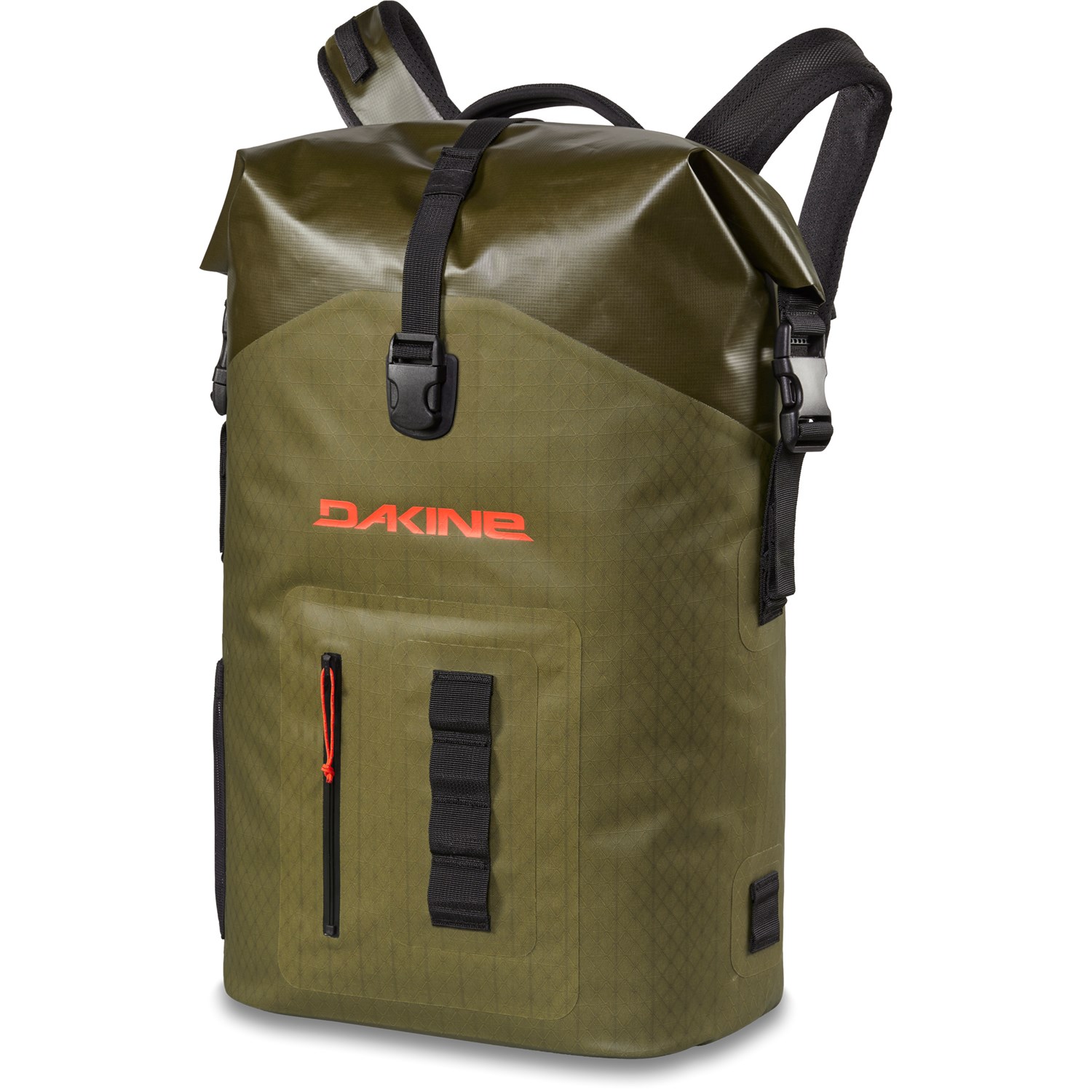
Pack Volume: 34 L
Dimensions: 21″ x 13″ x 9″
Material: 52% Recycled Nylon, 48% Recycled Polyester
Wet/Dry Bag: Yes
Warranty: 10 years
Check Price on Backcountry Check Price on EVO
In Santa Cruz, it’s wetsuit weather year-round, so I’ve had to develop a system for transporting my wetsuit to and from the beach. Before heading out, I’ve been suiting up in the house and then packing my gloves, booties, and hood into my Cyclone. I also throw in some sunscreen and a water bottle before heading out.
I’m walking distance to a couple of surf spots, so depending on the forecast, I’ll sometimes walk and sometimes drive to the beach. For the times when I walk, it’s important to me that all my gear can fit into a pack so that my hands can be free for carrying my board (I’m a tad far for walking, so I tend to switch between both arms when one gets fatigued). The Cyclone has classic backpack straps as well as a sternum strap that ensures the pack is comfy yet secure for my travels.
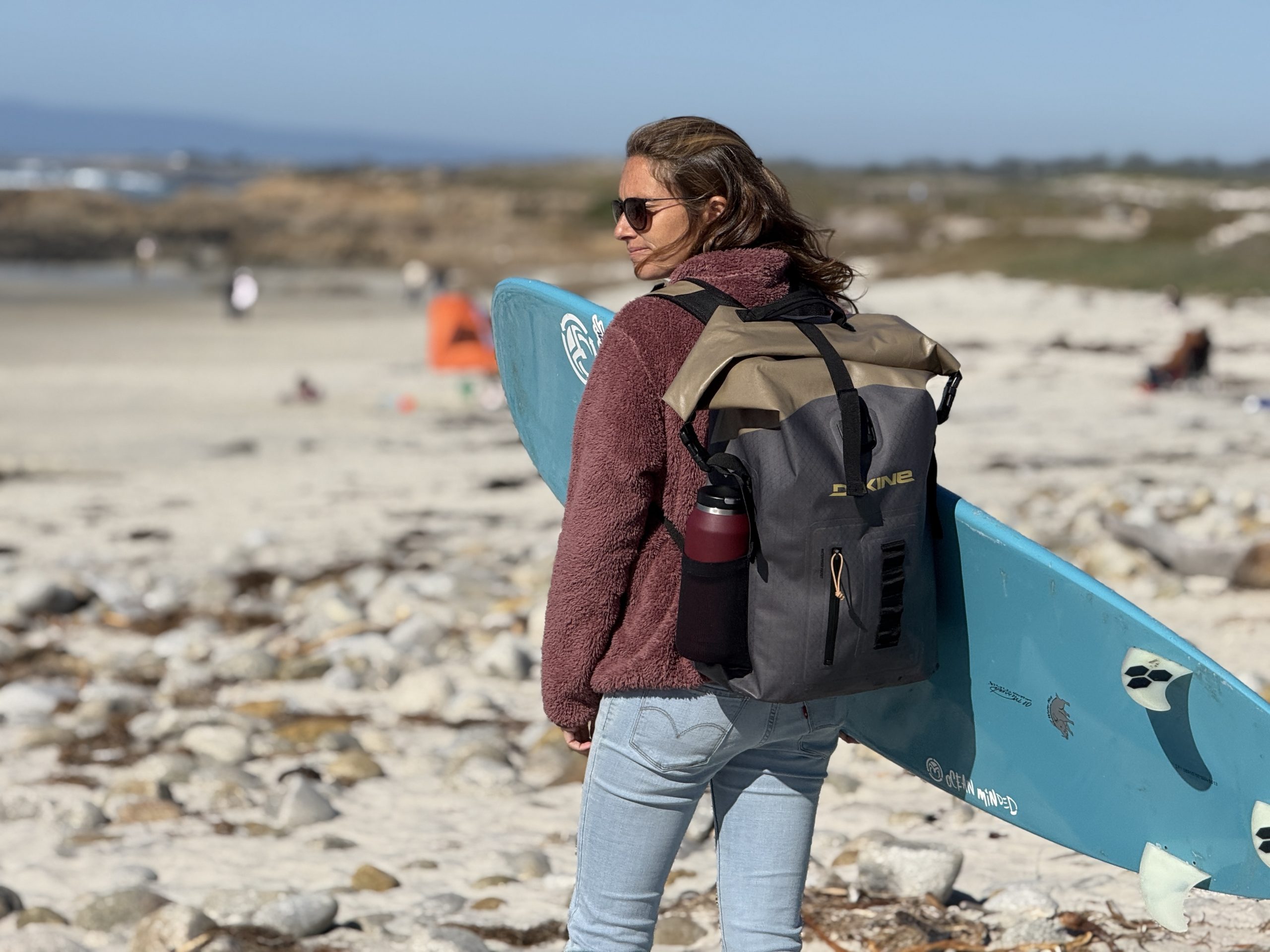
All of my surf gear easily fits into the Cyclone, allowing my hands to remain free to carry my board. Photo: Rebecca Parsons//The Inertia
After my session, I load everything back into the Cyclone to transport it home. If I’m walking, once again, I want my hands to remain free. If I’m driving, I do not want my wetsuit soaking my trunk, so I always make sure to throw it, my gloves, booties, and hood, into the pack and fully roll down the top and secure it to ensure the water stays in and my car stays dry.
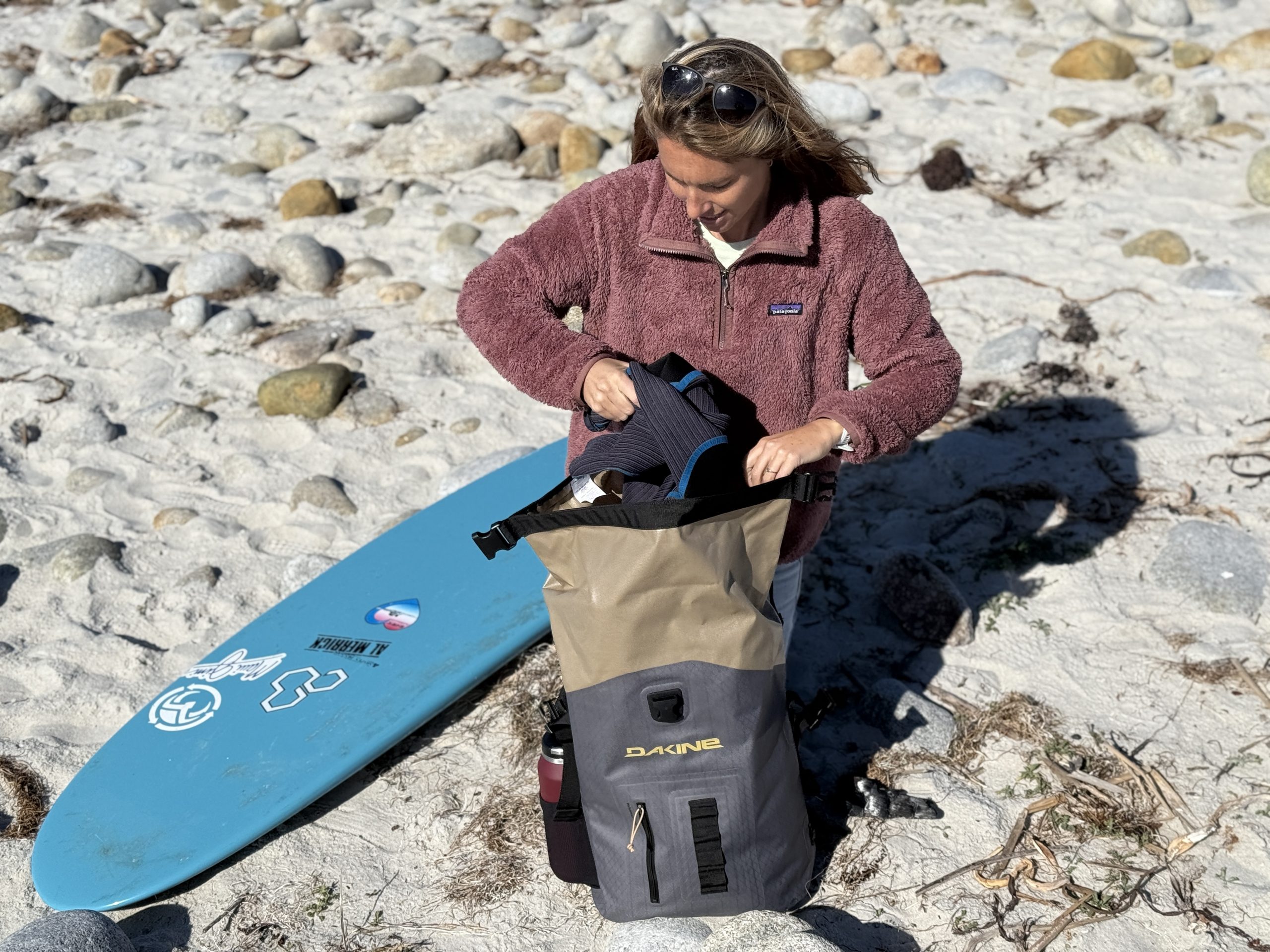
The Dakine Cyclone is a great option for surf travel, paddling, and treks to the beach. Photo: Rebecca Parsons//The Inertia
Although I have yet to use the pack this way, I can see the Cyclone being an amazing travel pack for surf trips and beyond. Many of my past surf trips have involved taking boats to outer reefs, and sometimes the sea spray drenches your towel, clothes, or camera if the seas are rough. This pack would be a great option for stowing dry gear out to the break to ensure you have a warm towel to cozy up in post session and a functioning cell phone/camera. I also plan to take this pack for stand-up paddling, kayaking, and on fishing trips and use it as a dry bag.
What I Love (And Don’t Love) About the Dakine Cyclone
Wet/Dry Bag
As a former raft guide, my husband is constantly reminding me that nothing wet goes into a dry bag. But to make the most out of the Cyclone, this is a rule that you can (and should) break. Think of it as a reverse dry bag, if you will. In fact, the Cyclone is advertised as a wet/dry bag, as the intention is to store your wet gear inside so that all of the water stays in the bag. Or, if you prefer to store dry gear inside, then you can use it like a traditional dry bag.
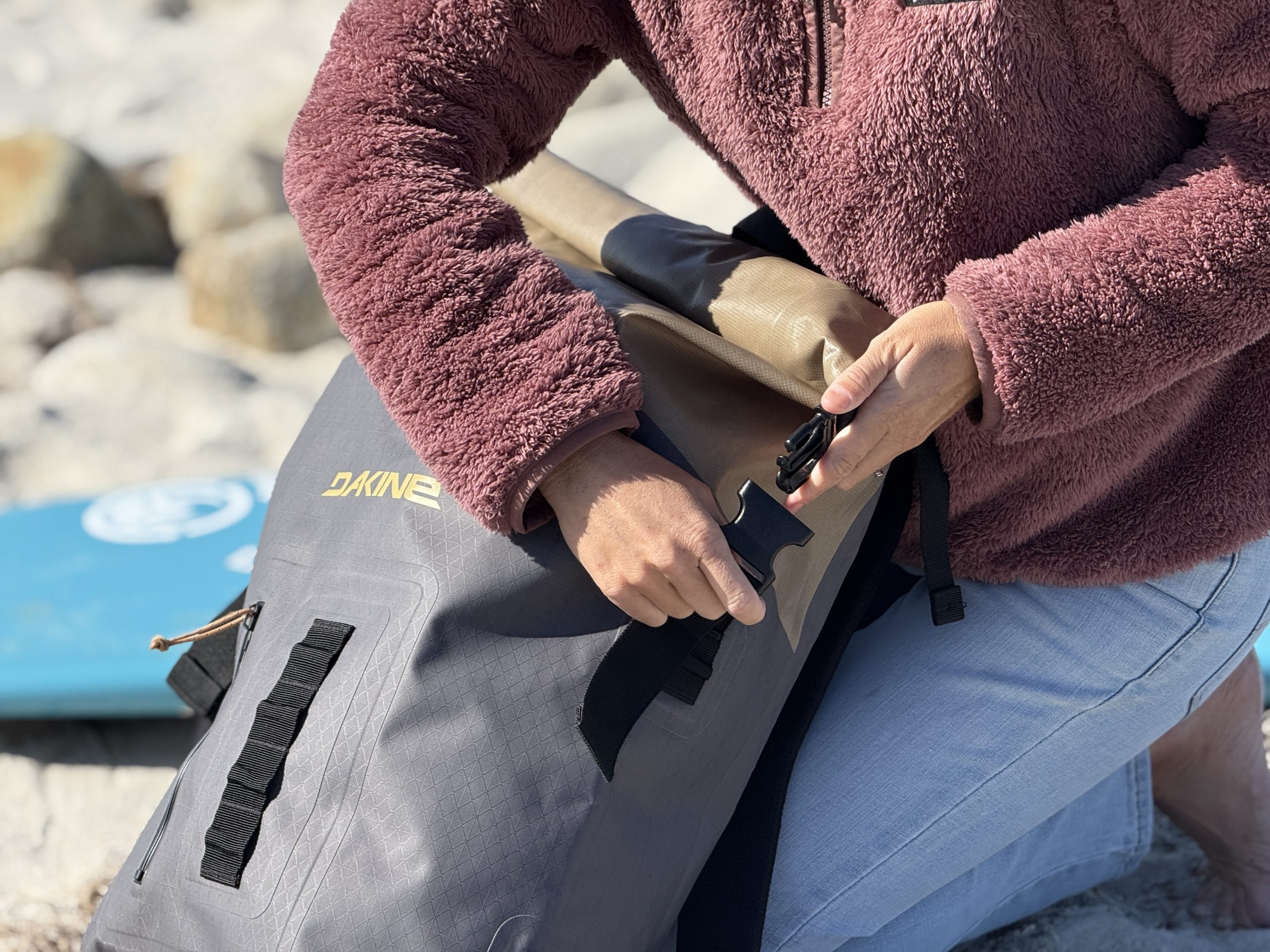
You must fully roll and buckle the Cyclone to ensure it’s waterproof. Photo: Rebecca Parsons//The Inertia
Similar to a dry bag, you must ensure that you fully roll down the top of the bag and secure the buckle to ensure everything stays dry. If you’re not going far, you may choose to throw your wet gear in the bag and prop it upright. Let me tell you from experience, bumps and turns may cause the pack to tip over and the water from your gear to spill out. Always roll and secure your pack. Made from a blend of recycled nylon and recycled polyester, the Cyclone features fully welded construction, meaning that it’s fully waterproof if you have it properly sealed — take full advantage.
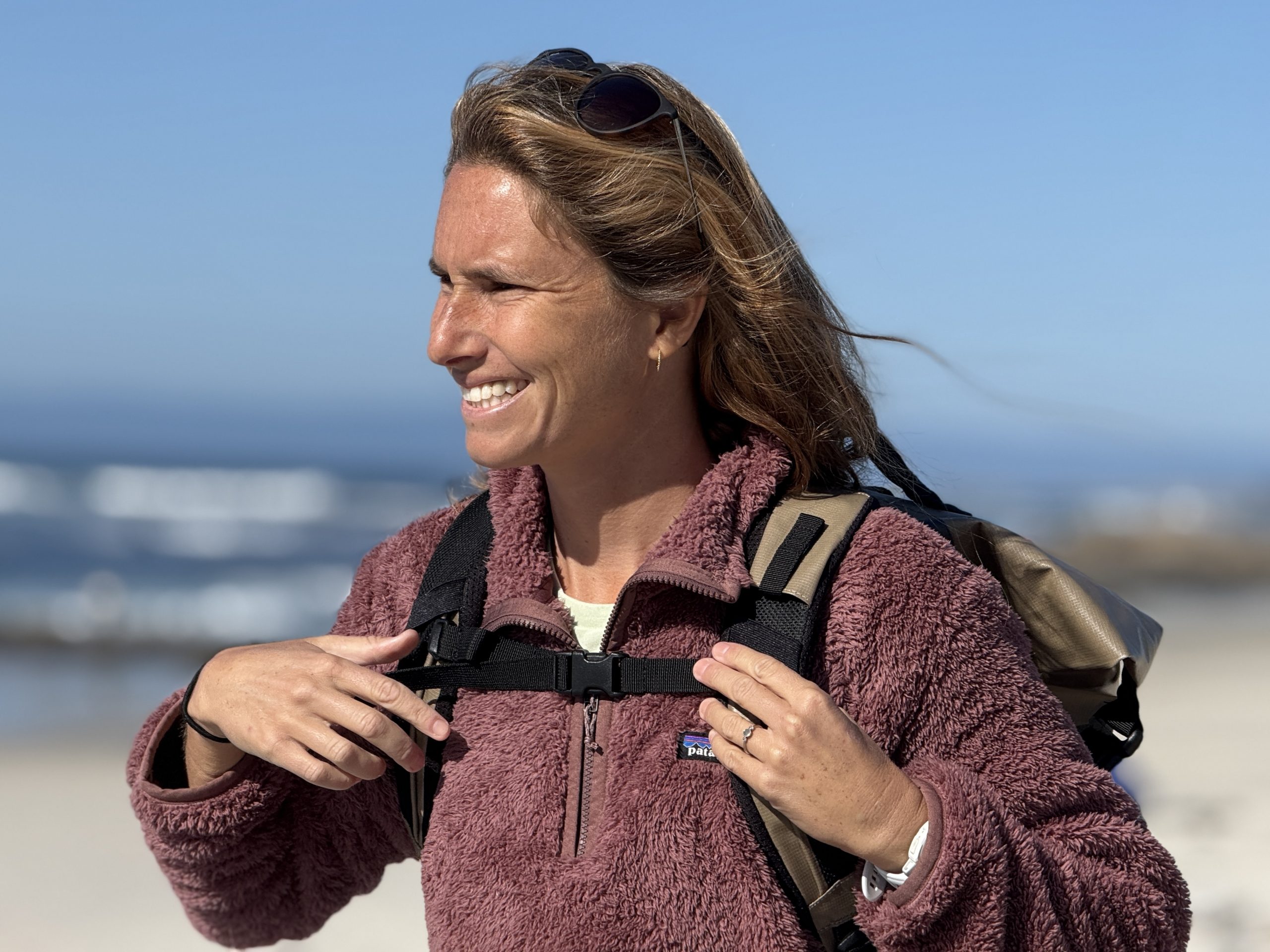
The padded shoulder straps paired with the sternum strap make the Cyclone comfortable and easy to transport. Photo: Rebecca Parsons//The Inertia
Straps/Padding
Some of my favorite features of the Dakine Cyclone are the padded shoulder straps and back panel. When I’m driving to a surf break, it’s not super necessary, but for those times when I’m walking, I really appreciate having some padding. To top it off, the straps are fully adjustable and include a sternum strap for an extra secure fit. Additionally, there is a handle on the top of the pack that I often find myself reaching for when carrying it short distances.
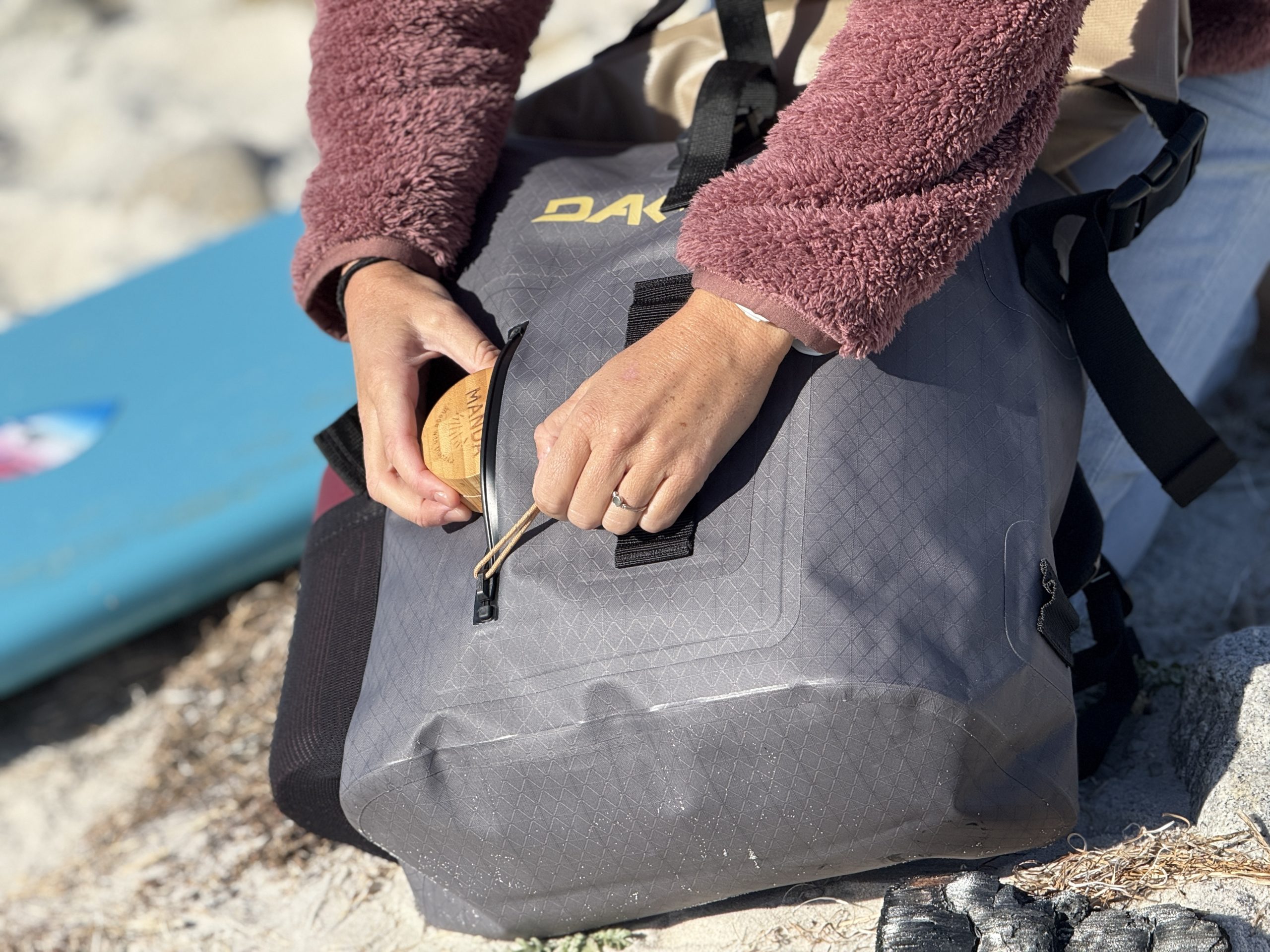
The small zippered pocket is perfect for stashing sunscreen and wax. Photo: Rebecca Parsons//The Inertia
Storage Space
The Dakine Cyclone that I tested is a 34 L pack. If you’re anything like me, you might not really understand what that will look like in person. For reference, I’m 5’7″ and, on the ground, the pack hits about mid-thigh when fully unrolled. I can easily fit a wetsuit, towel, and accessories into the pack and can even fit two full wetsuits if necessary. The pack measures 27.5 x 18.5 x 6.7″.
For additional storage, there is a small zippered compartment on the outside of the pack. The exterior pocket is also fully waterproof, but it’s small — just big enough to stash a bar of wax and a container or two of zinc or a small face sunscreen, but that’s about it. There’s also a water bottle holder on the outside of the pack that makes accessing your water easy. Finally, there is a small daisy chain on the front of the pack as well as one singular loop on the side where you can hook on carabiners to lug extra gear.
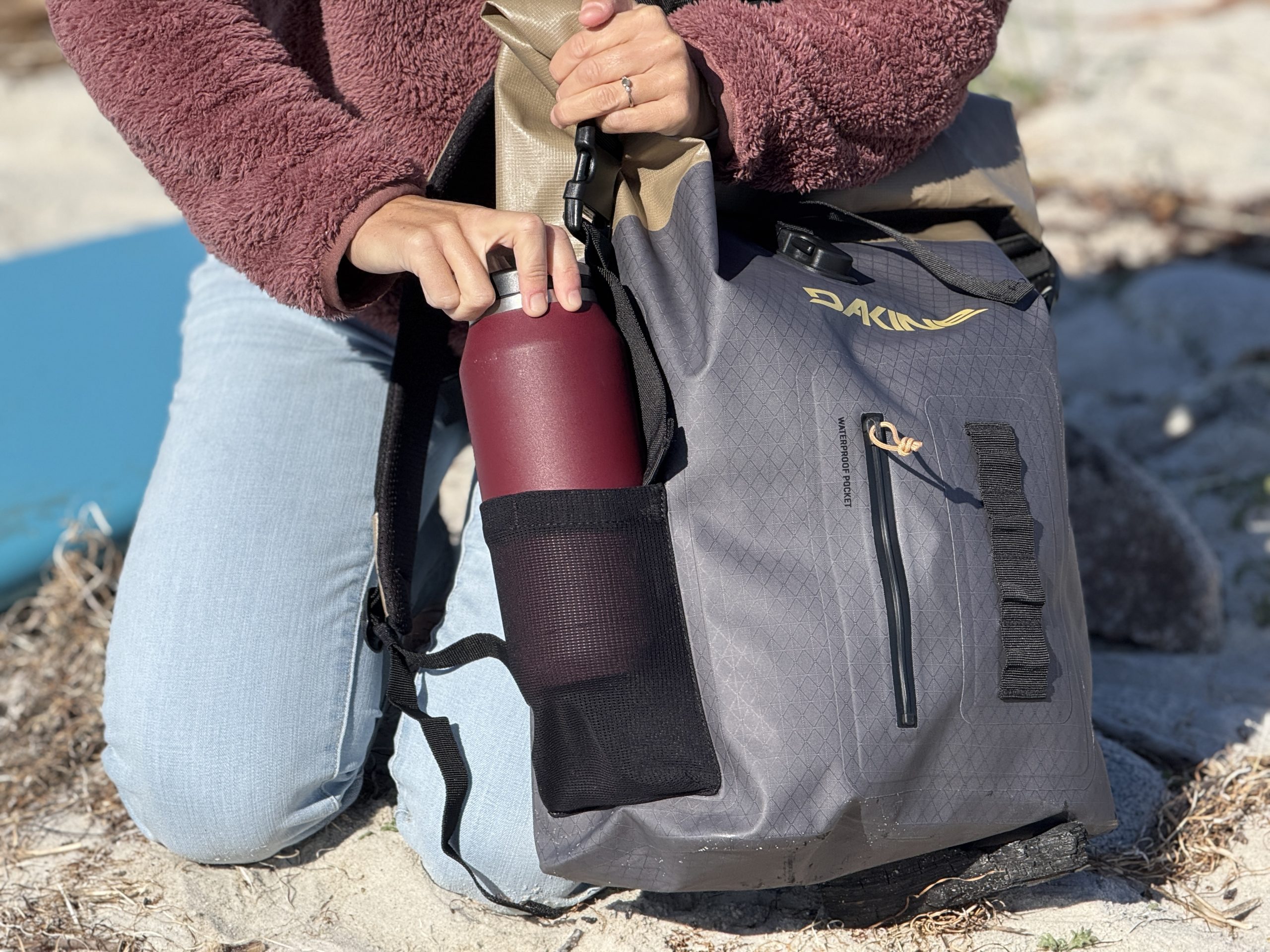
The external water pocket makes for quick and easy hydration access. Photo: Rebecca Parsons//The Inertia
I appreciate the assortment of storage the Cyclone offers, but if I’m being nitpicky, I wish there was a tad more. In a perfect world, there would be two separate compartments on the inside so you could simultaneously store wet and dry gear. I’m aware this design could be challenging, so I’d settle for a slightly larger exterior pocket so you could stash a small towel or a t-shirt.
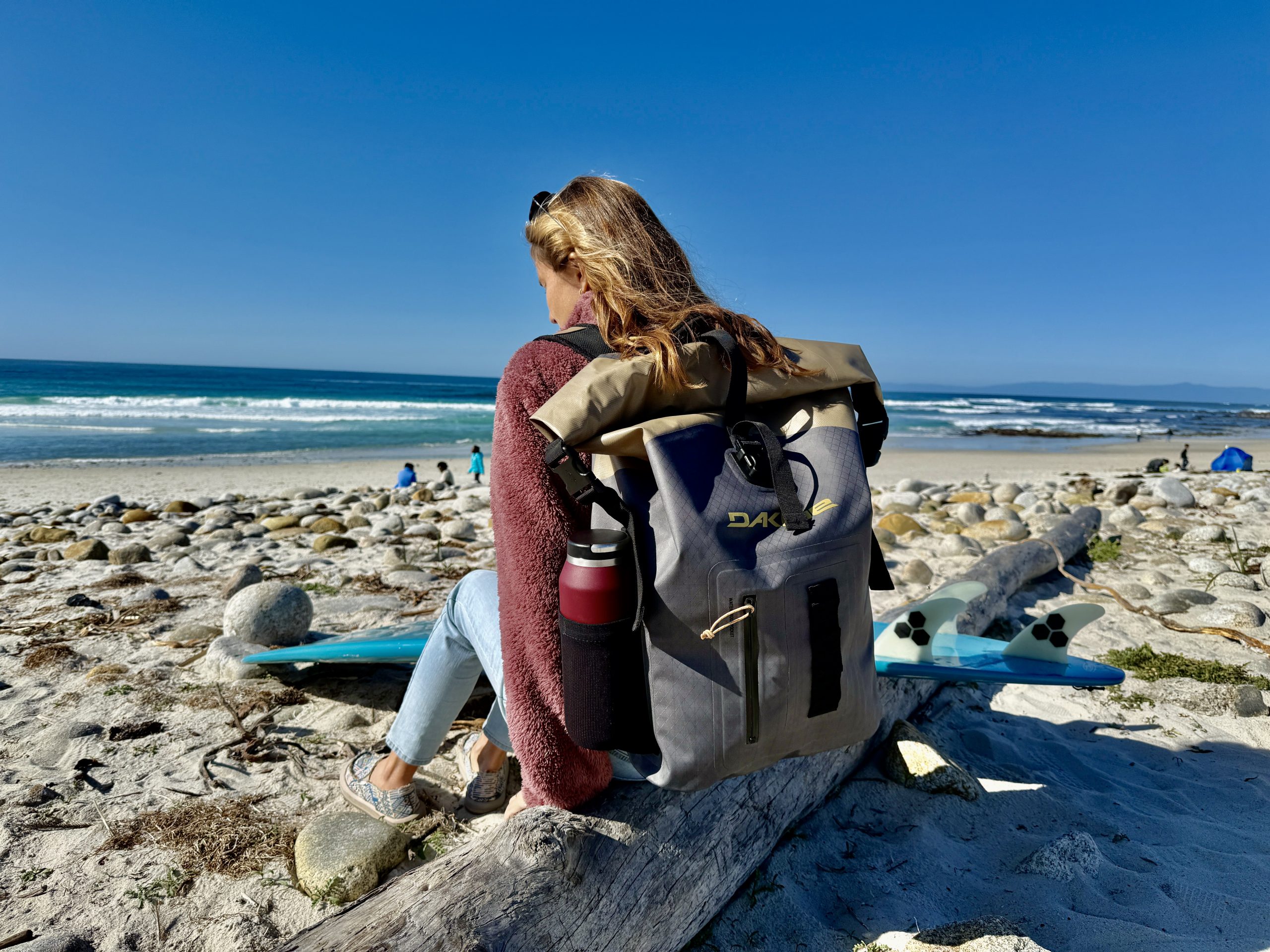
At 34 L, the Cyclone is plenty spacious and reliably waterproof. Photo: Rebecca Parsons//The Inertia
Final Thoughts
If you’re looking for a new surf backpack, look no further than the Dakine Cyclone Wet/Dry 34L Rolltop. The pack is plenty spacious, and the waterproof construction ensures your wet gear won’t make a mess in your car or hotel room. It’s simple, effective, and has held up really well. Although the price is a tad steep, the Cyclone is durably made and is sure to accompany you on surf trips for years to come.
Check Price on Backcountry Check Price on EVO
Editor’s Note: Looking for a different style surf backpack? Check out our guide to Best Surf Backpacks. To check out more surf gear reviews, click here. For the most recent gear reviews on The Inertia, click here.

The Best Surf Backpacks


