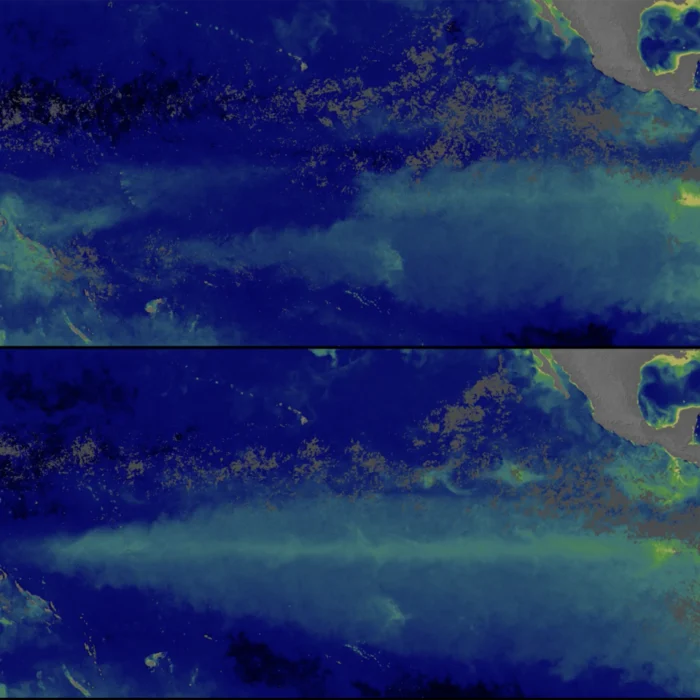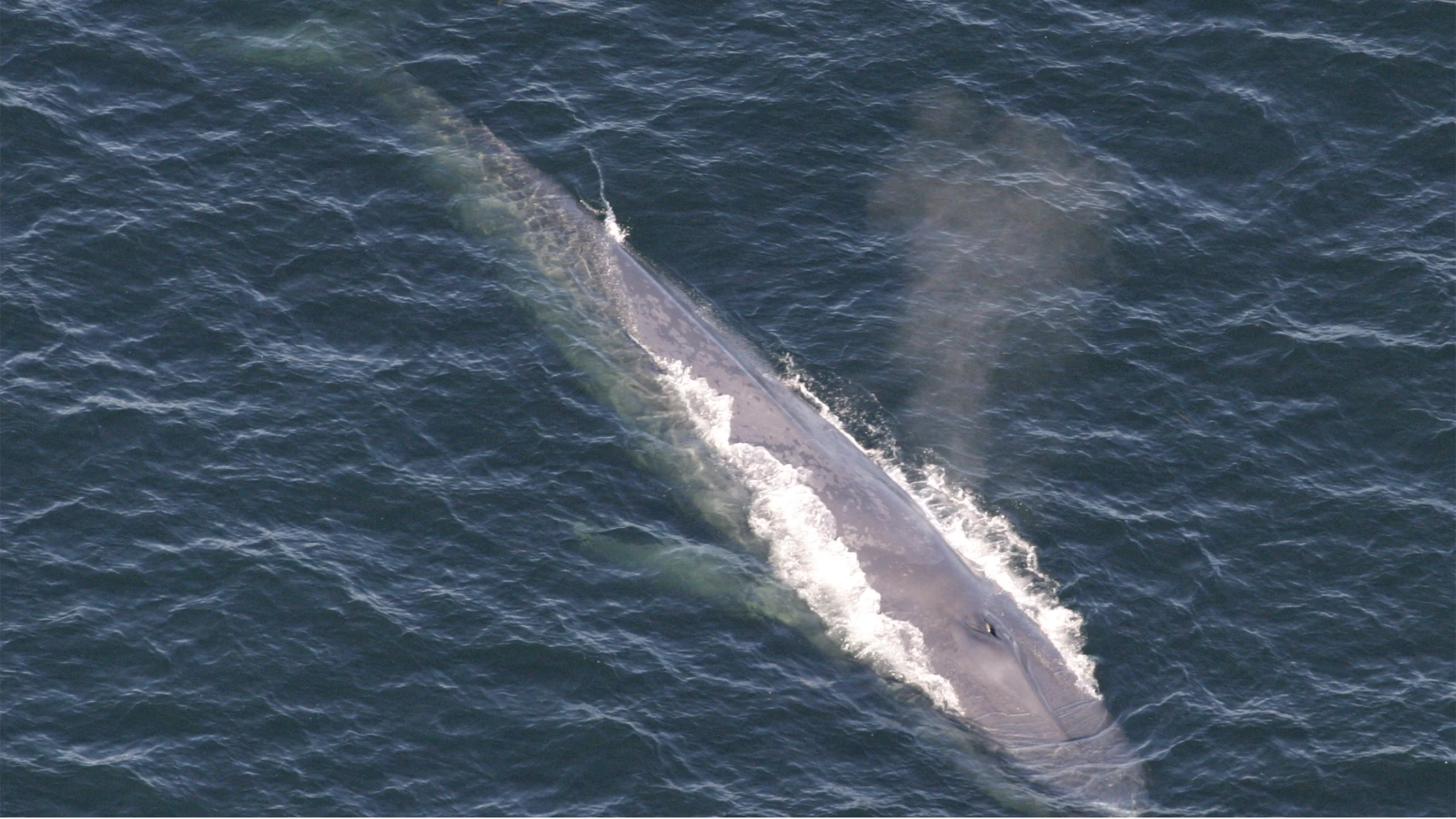
This year’s monster El Niño is wreaking havoc on the planet. Floods, coastal erosion, and all manner of wild weather is affecting different parts of the world, and it may be affecting blue whales around the Galápagos Islands, too.
According to reports, a team of researchers looking to tag blue whales — the largest creature on Earth — around the Galápagos where the endangered species generally abound. Over a four-month span between October 2025 and January 2026, however, those researchers came away empty handed. They didn’t find a single one.
This is an odd development, because the areas surveyed (San Cristóbal, Isabela, Fernandina, the Santiago Islands, and the Bolívar Channel) are known for being places where blue whales are plentiful. In the month before the study began, 45 blue whales were seen in August alone.
While they were looking for whales, the researchers also took a few water temperature measurements. Since the Galápagos Islands are very important stops for migrating blue whales. They rest there, eating as much as possible from the rich waters, before moving on to complete their incredibly long migrations.
“Not finding whales during an intensive search effort does not mean they have stopped coming to the Galápagos,” said Daniela Alarcón, scientific lead of the expedition, in a statement. “By combining these records with oceanographic data, we can begin asking better questions about the conditions that determine their presence and how much their movements may vary.”
While it’s not quite confirmed, it appears likely that El Niño probably has something to do with the mysterious disappearance of the blue whales. Water temperatures both at the surface and down deeper were higher than average.
“These are higher than normal temperatures for that time of year and could be a potential reason why the whales stayed away,” wrote IFLScience. “in fact, 20°C (68°F) water is usually found at a depth of 20-45 meters (66-148 feet), but was actually found between 78 and 96 meters (256-315 feet) deep. The team also found that the whales’ food was swimming at one depth, while the whales’ ideal temperature was at another depth completely.”
“To conserve the largest animal on the planet, protecting only the places where we are able to see it is not enough,” said Yacqueline Montecinos, leader of WWF’s Eastern Pacific Blue Corridor initiative. “We need to understand and protect the entire route that makes these encounters possible. That is the scale at which whales move, and it is also the scale at which we must approach their conservation.”
Thankfully, in the month after the study ended, a blue whale and her calf were spotted by citizen scientists off San Cristóbal. Still, though, it is a drastic decline in what researchers are used to seeing this time of year.