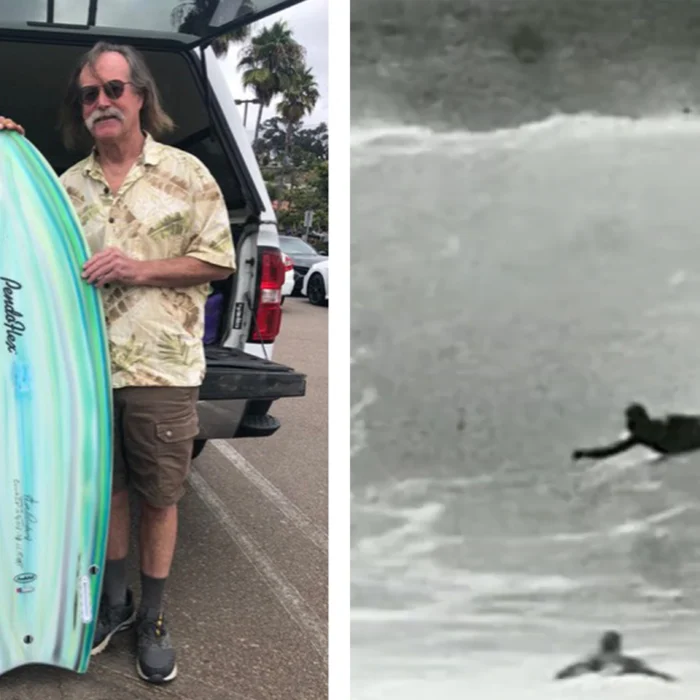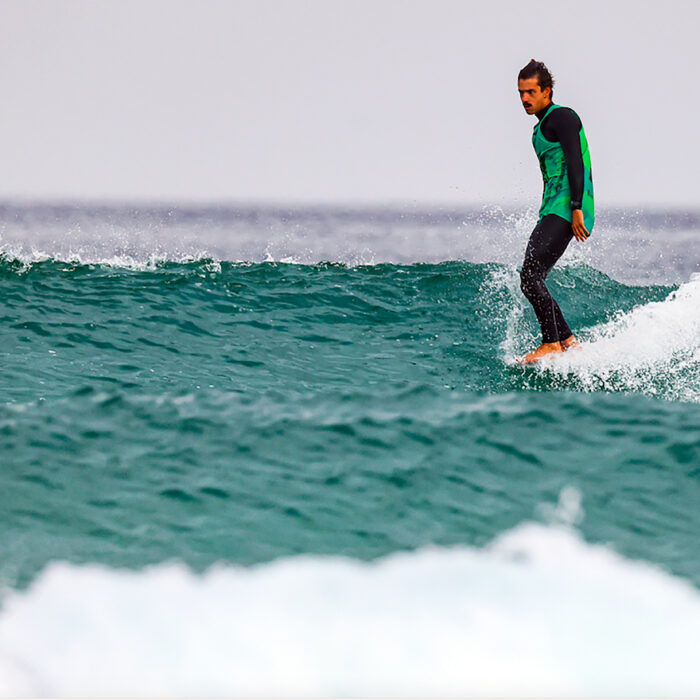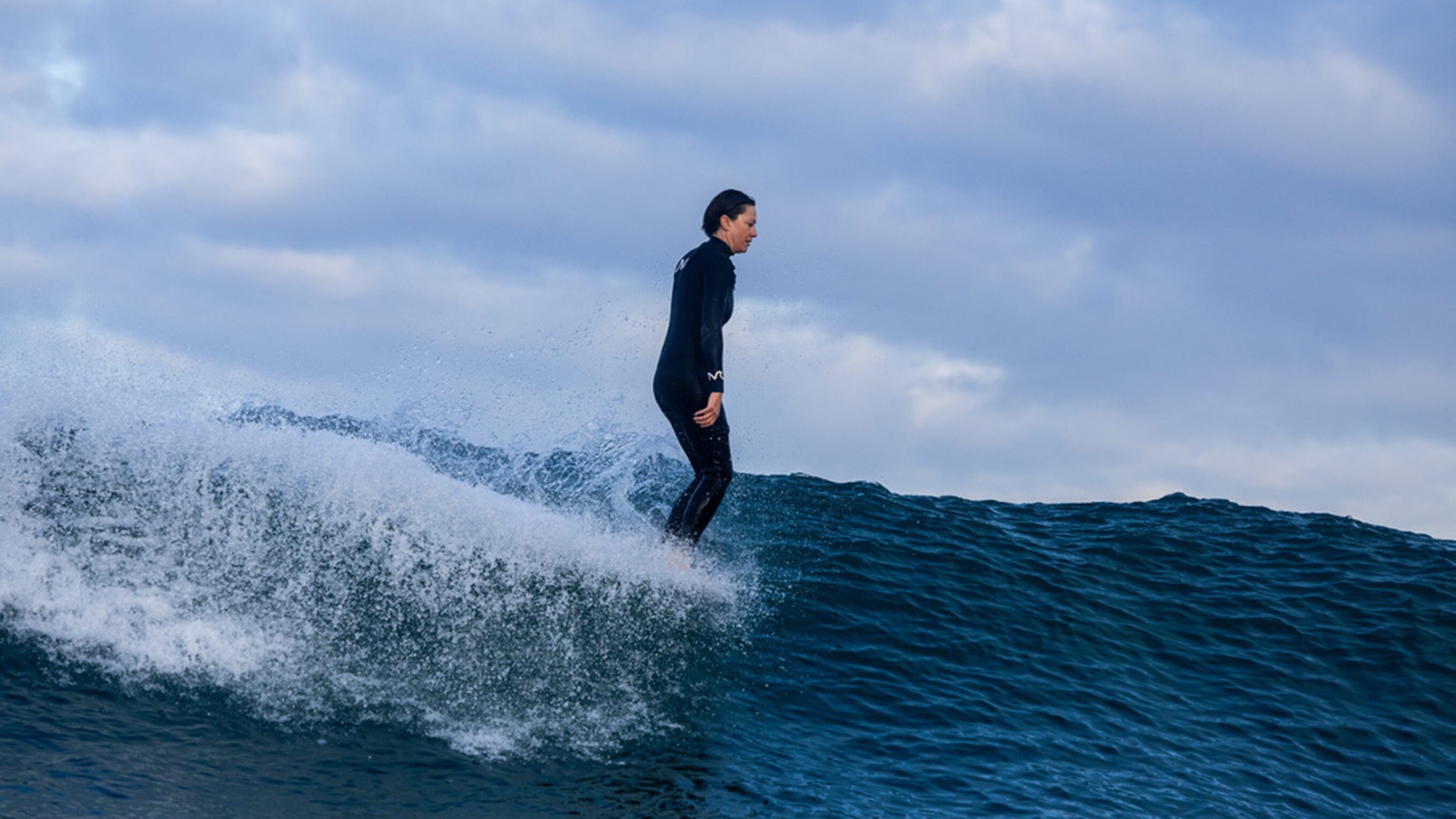
After years away from competitive surfing, Summer Romero returned to the contest scene and started winning heats. To the regulars who didn’t know her, she seemed to come out of nowhere. They weren’t ready. But Romero wasn’t new to this. She was a former world champion longboarder with decades of experience behind her.
At a recent contest, her return caught the attention of a young female surfer, also a former world champion. She approached Romero and asked what seemed like an innocent question.
“Who are you?”
Romero laughed it off.
“I’ve been doing this a long time,” she told her.
It’s a funny exchange, considering the fact that Summer Romero won a world title in 2004. But it also says something about how quickly the history of women’s longboard surfing can fade from view. A new generation of female surfers are coming up, and some of the women who helped shape the sport are no longer household names, even within the surfing community.
So, who is Summer Romero?
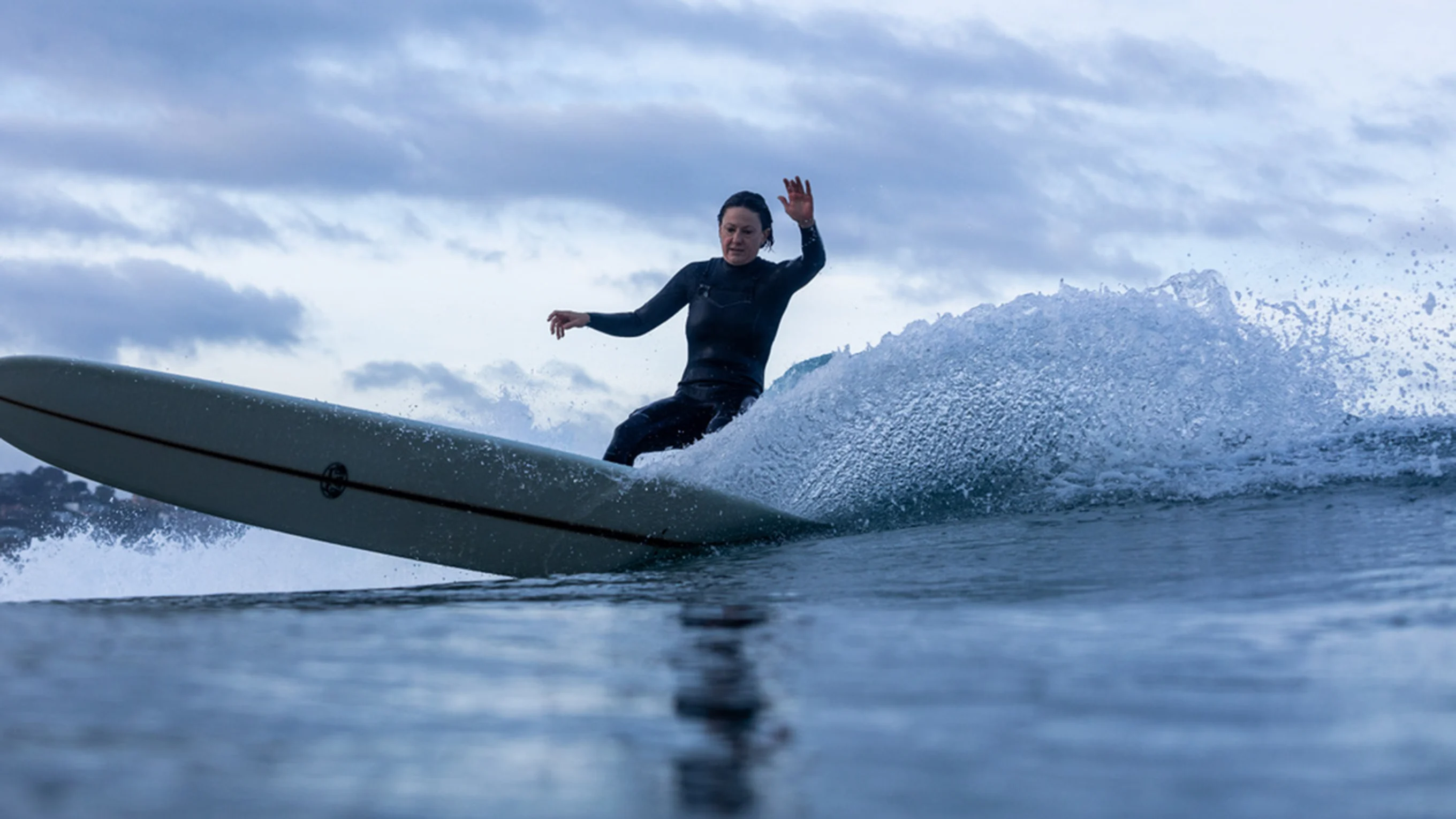
Learning by Watching
Romero didn’t grow up at the beach. Her family weren’t surfers, and surfing wasn’t part of her world until a family friend introduced her to it. She was around 12 or 13 years old when that friend, an avid surfer, took her to Dog Beach in San Diego County and pushed her into her first wave. She stood up. And that was it. She was hooked.
“It felt very natural,” she said. “I remember people around me being in shock that it was my first time, that I was standing up with such ease.”
The praise felt good, especially for a young girl trying something new. But it wasn’t just the encouragement that made her want to keep surfing.
“I immediately was addicted,” she remembered. “That night, I was begging my parents, like, ‘how do I get a surfboard?’”
Her parents weren’t quite convinced. They figured it might be a passing phase, so they weren’t about to spend a bunch of money on new equipment. Romero grew up inland, away from the beach, so getting to the ocean was a challenge. Her first board was a used shortboard from Play It Again Sports for around 40 bucks.
The family friend who pushed her into her first wave became an important influence, introducing her not only to surfing but to the culture. A Pacific Beach local who frequented Tourmaline, he showed her a side of surfing that would stay with her long after spending plenty of time learning down in Baja, Mexico.
“We went to Mexico a good amount of times,” Romero said. “We would go to Raul’s, a little spot that’s not so secret anymore. At the time, it was fairly secret, and just going and being away from people was really what drew me into surfing.”
He took her to the beach, where she began spending time around some of San Diego’s best longboarders. She remembers surfing with Larry Gordon of Gordon and Smith and Skip Frye, two surfers she came to admire for their approach and their commitment to the art of longboarding.
“They were definitely influential for me in learning about longboarding and the culture,” Romero said.
A Surfing Community
Guys like Gordon and Frye were living legends of the ’60s surfing era, when longboarding wasn’t just a pastime. It was an art. They embodied that art, and their passion was evident. They were committed to the craft. The waves were where they expressed themselves.
Everything about it had meaning. The community. The routines. The dedication. Together, it created a structure Romero could see herself in. She grew up inland, removed from the surf culture that surrounded her peers at the beach. Here, she found a place where she could be free, but still feel grounded.
“We had amazing legends in San Diego that we could idolize,” she said. “I got to surf with all these guys who were really focused on traditional longboarding, the art and the love of the sport.”
Romero is convinced you have to be part of that culture to truly be great.
“When it comes to longboarding specifically, you have to live it, love it and see it to know what it’s about,” she explained. “Style is everything. Everyone has their own style, and people gravitate toward different approaches. But clean surfing — the glide, like Skip Frye is all about — is about going with the flow of what the wave is doing. You don’t have to force things. When you learn the energy of the waves and where to put yourself, seeing somebody do it the right way is just a beautiful thing.”
Romero, of course, started riding a shortboard first. Lisa Andersen was a major influence, and women’s shortboarding was what she saw in magazines. It was a natural direction for a young girl to follow. But growing up around the longboarders of Pacific Beach, she began to see surfing differently.
“That area was very longboard-centric,” she said. “Once I saw what people around me were doing on longboards, I was like, ‘I gotta get that.”
Her first new surfboard was a board by Bob McTavish, the Jason Blewitt Model, which she bought at Hansen’s in Encinitas.
“I just took it out as much as I could and tried to teach myself how to do what the boys were doing,” she said.
There weren’t many girls surfing around her at the time, so she learned by observing the people she had access to. She was shy, but paid attention. As she spent more time in the water, longboarding began to feel like a better fit, both for the waves she surfed and for the style of surfing she wanted to develop.
“It was more aesthetically pleasing for me,” she said. “And the people I was hanging out with, the area I was surfing in, it just made sense.”
She also found something beyond the surfing itself. There were the early mornings, the familiar faces and the shared routine of showing up because you loved being there.
“You can tell it’s a passion,” Romero said. “These guys get up early every morning to go dawn patrol because they absolutely love it.”
That devotion was contagious. Surfing became about more than catching waves or getting better. It was about spending time with friends and being part of a community that valued the art of riding a wave.
“Being around your friends and having a routine and having that community was just everything to me,” she said.
Local Contests to a World Title
By 17, Romero had started entering local contests in Pacific Beach. She didn’t have a grand plan to become a world champion. She simply enjoyed competing and was curious to see where it might take her.
Those early events opened another door. Romero and some of the local surfers she knew were sponsored by Red Ink, a clothing company in Pacific Beach. The sponsorship gave them a little team of their own, with a shared goal of showing up, surfing well, and having fun.
It eventually led to her first international contest, the Rabbit Kekai event in Costa Rica. Romero was 18 and had never been out of the country. Traveling on her own was a big step for someone who hadn’t grown up in a family of travelers.
“It was very eye-opening of what the world had to offer,” she said.
The trip was about more than the competition. She was surfing good waves, watching talented surfers, and experiencing a world beyond the beaches she knew at home. Winning mattered, but it wasn’t everything.
“It was all about watching really good surfing, surfing really good waves and having fun,” she said.
Travel became another addiction and she wanted more. After graduating from high school, she spent a month in Australia with a couple of team riders. Her family worried about her traveling so far, but Romero was ready. Competition had opened up a world she hadn’t known was waiting for her.
Still, Romero wasn’t building her life around the idea that surfing would pay the bills. She knew she wanted a college education and a career. She eventually pursued nursing, with competitive surfing running alongside her studies.
Balancing both wasn’t easy. Getting into a nursing program required serious academic focus, and she was working toward a career that would demand plenty of her time. But she also had strong results in the water, including a memorable contest at the World Championships in 2001. Romero made the final against Cori Schumacher, a surfer she greatly admired.
“I was so terrified that I didn’t want to win that contest,” she said.
It wasn’t that she didn’t want to do well. It was that Schumacher was a surfing icon to her; someone she had looked up to for years. The idea of beating her was almost too much to process.
“In my mind, she was the best,” she said, “so why would I want to win a contest if somebody else is better than me?”
Schumacher won. Romero got second and kept competing. By 2004, her mindset had changed. She was still going to school and working toward a future in nursing, but she was ready to see what she could do in the water. That year, she won her world title at Huntington Beach.
“Come 2004, I was in a space where I’m like, OK, I do want to win,” she said. “I just did the best I could, and it worked out.”
But instead of celebrating that title, she went home to do homework.
“When I won my title,” she laughed, “I actually had one beer and I went home and finished a paper for college.”
It’s a detail that says a lot about Romero. Winning a world title was a major achievement, but it was one part of a life she was building beyond surfing. She wasn’t waiting for the sport to offer her a future. She was making one for herself
A Return To Professional Surfing
After college, Romero became a nurse and fell in love with critical care. She had chosen nursing partly because the schedule could leave room for surfing, with 12-hour shifts and blocks of days off. But as she became more invested in her career, surfing gradually took a back seat.
She still surfed, but there were periods when she wasn’t in the water much. At one point, she entered a contest after a long break and struggled. A fellow surfer, Kelly Sloan, gave her some blunt advice.
“She was like, ‘Girl, you need to start surfing more,’” Romero recalled.
It hit home. Why show up to a contest if she wasn’t going to put in the time? That comment sparked her to surf more, but it took another person to help reignite her competitive drive. Gretchen Harris, then president of the Oceanside Longboard Surfing Club, encouraged her to enter contests again. Friends reminded Romero that she still had the ability to compete.
“That really lit the fire for me,” Romero said. “A couple of friends started telling me, ‘You still got it. You should do it.’ Having people believe in me gave me the push I needed because I didn’t really believe in myself at the time. Then I started doing well again and realized, ‘oh, shoot, I can still do this.’ It became fun again. And if I’m having fun, why not keep going?”
Over the past four years, Romero has returned to competition with a different perspective. She knows what it takes to build a career outside surfing. She also knows how much she still enjoys challenging herself in the water.
“I love a challenge,” she said. “It’s definitely harder at this age, but again, it’s a challenge.”
At 44, she’s competing against younger surfers with more stamina and plenty of ambition. Contests can be stressful, she said, especially when you’re putting yourself out there and comparing your surfing to someone half your age. But if she’s still making finals and enjoying herself, she sees no reason to stop.
She also recognizes that the professional landscape has changed. Today, the World Surf League has a structured longboard tour, with qualifying events leading to a smaller number of tour stops. In the early 2000s, there were different series and individual events, but the system was less consistent. One thing, she said, hasn’t changed much: the money.
Romero remembers winning around $4,000 at some events in the early 2000s. She estimates that winning a World Surf League longboard event today pays around $5,000. After more than two decades, the prize money has barely moved.
That makes it difficult for surfers to justify the expense of traveling to compete. Entry fees, flights, lodging, and other costs all add up. A talented surfer may want to pursue the sport, but passion alone doesn’t pay for the trip.
“It takes money to make money,” she said. “If you 100 percent know that you have a decent probability of winning more than you’re spending to get to the event, then you’ll see more people show up, because the competitors are there. They want to compete, but they’re not gonna just, you know, waste their time and money.”
It’s a familiar challenge in women’s sports. The talent is there, but financial support doesn’t always follow. Without the opportunity to earn a living, it becomes harder for the next generation to dedicate itself to competing.
The Women Who Came Before
For Romero, one of the best parts of surfing is its respect for the people who came before. She grew up watching the older surfers, learning from them and finding her place in a culture that valued its history.
“I just had so much respect for them,” she said. “One of the coolest parts of surfing is it’s a very respectful sport where we do pay homage to the legends that have come before us.”
She wants to see that respect continue, especially among younger women. There is still so much to learn from the surfers who came before them, she said. Their knowledge and experience can help the next generation progress.
So when a recent world champion approached Romero at a contest and asked, “Who are you?” it was funny. But it also exposed something bigger.
How could that surfer know who Romero was if her story was never part of the history she was taught?
Romero wasn’t offended. She understands that surfing keeps moving forward. New generations arrive, new champions emerge, and the sport evolves. But moving forward shouldn’t mean not remembering the women who came before.
“I would just like to see them know a little more of the history,” she said. “Pay respect to that, and use that, because we’re still learning from the past.”
Romero is still making her own history. After winning a world title in 2004, she built a career in nursing, stepped away from competition, and then eventually found her way back. She’s still competing, still learning, and still pushing herself to become a better surfer. She wants younger women to see that, too. If she were a young girl watching an older woman still making finals, she said, she would find that inspiring. But visibility can only do so much if the stories disappear when the surfers leave the water. Summer Romero’s story is one that definitely needed to be told.