
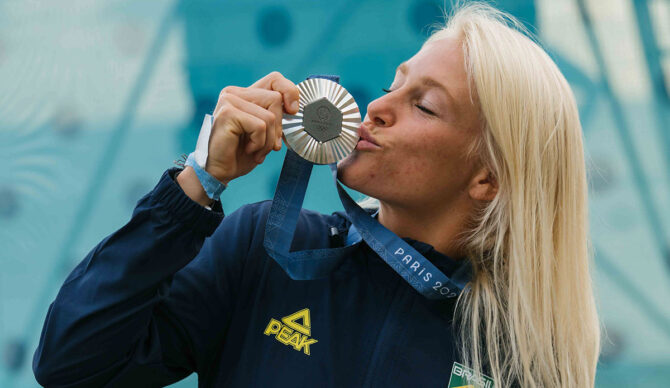
Many CT surfers have criticized the new Olympic qualification system, but they could discover it works to their advantage. Photo: Beatriz Ryder//ISA

For some of the world’s best surfers, qualifying for the Olympics just got harder – at least on paper.
The new Olympic qualification system recently released by the International Surfing Association reduced the number of guaranteed slots reserved for Championship Tour surfers. What was once 10 men and eight women, capped at two per country, is now five per gender, capped at one per country. Consequently, a handful of top pros – including the reigning champ Yago Dora – are upset.
But they’ll get used to it. In fact, many of the surfers most critical of the changes may ultimately find that the new system works in their favor.
Heated Instagram comment sections aside, the most contentious revelation is that the ISA appears to have crafted the new system without involving the World Surf League at all – an accusation pushed by the WSL and CT athletes, and not denied by the ISA.
The ISA can play hardball, but let’s not forget who controls access to the world’s best surfers: the WSL. There’s a delicate balance between asserting authority as the Olympic federation and appeasing the professional league. Not giving the WSL – or its surfers – a meeting, or even a courtesy call, is flying dangerously close to the sun.
The WSL has publicly called for the ISA to “correct” the system, igniting a public standoff not seen since the two organizations struck their original, bipartisan Olympic deal. But unless the league or its athletes are willing to make real threats – aka boycotting the Olympics – the controversy will fade. Surfers will put their heads down and chase qualification, and by 2028, the WSL will be posting Instagram reels breaking down Olympic qualification scenarios like nothing ever happened.
Still, the ISA should find a way to make the WSL feel included. A little competition between a pro league and an international federation can be healthy, but toxic sparring could be disastrous. For context, such tensions are why hockey pros didn’t compete in the 2018 and 2022 Winter Olympics.

Kauli Vaast showed that surfers who qualified at the World Surfing Games could do more than hold their own at Paris 2024. Photo: Pablo Franco//ISA
Which system actually benefits CT surfers?
Several CT surfers argue the new format risks keeping the world’s best surfers out of the Olympics. There will be cases where a top CT surfer loses out to a lesser-known athlete in qualification events, but it was the previous system – particularly for surfers from dominant nations like the United States, Brazil, and Australia – that was restrictive. The two-surfer-per-country cap on CT qualification routinely excluded elite talent.
In 2019, for example, Filipe Toledo finished fourth on the Championship Tour during the Olympic qualification year, but Brazil’s two spots went to the higher-ranking Italo Ferreira and Gabriel Medina. Toledo had no other pathways to qualify. Four years later, Medina was initially shut out when Toledo and João Chianca finished ahead of him on the CT. He ultimately qualified at the last minute by grinding through the World Surfing Games, then went on to win an Olympic bronze medal.
Under the new system, many CT surfers actually have more pathways. Lakey Peterson, Tyler Wright, and Caity Simmers have all raised concerns, yet based on the 2025 rankings, each would have missed out under the old rules. Now, they can pursue continental qualifiers, the 2028 World Surfing Games, or help their country earn team slots in 2026 or 2027. They have five chances instead of relying entirely on CT placement. The new rules could very well lead to more CT surfers in the Olympics than the previous system given the quota is now three surfers per gender instead of two.
Even reigning men’s champion Yago Dora – one of the most visible critics of the overhaul – could ultimately benefit from the new system. With Gabriel Medina returning and stiff competition from Ferreira, Toledo, and Chianca, alternative pathways like the Pan American Games or World Surfing Games may be his key to qualification.
Dora clarified that his objection to the new rules is more that the rankings will come from the first four to five events of the 2028 CT instead of the 2027 final rankings. But ISA President Fernando Aguerre counters this, saying that the 2028 rankings will qualify today’s best surfers and not last year’s.
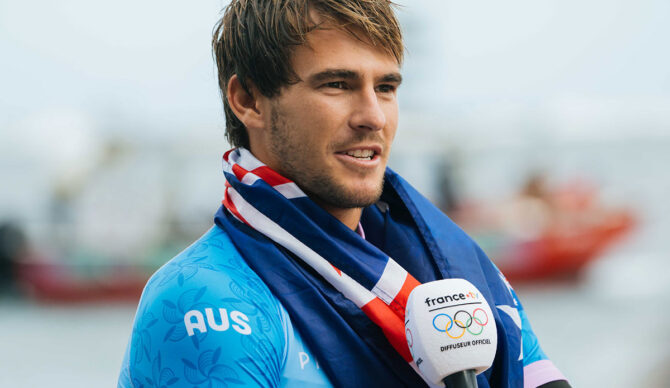
Athletes have reaped the rewards of Olympic visibility with sponsorship deals and inflated social media followings. Photo: Beatriz Ryder//ISA
Sure, some surfers have a harder path
Some surfers will face a steeper climb, particularly those who benefited from limited country representation on the CT.
Luana Silva, for example, publicly criticized the new system. Under the previous format, she would have had very high odds of qualifying. Even under the revised structure, she still would have secured the fifth and final CT-based spot based on the 2025 rankings.
But her case highlights a fundamental weakness in the old system. The CT – especially on the women’s side – lacks broad country representation, a core Olympic principle. As a result, CT-based qualification races were often anticlimactic.
In 2023, so few nations were represented on the women’s tour that four surfers qualified for the Olympics before the season even began. Take Teresa Bonvalot, a late injury replacement. She competed in just three CT events, had an average heat total of 4.92, and still earned a ticket to Paris – not exactly the intriguing qualification race the IOC was hoping for.
From the ISA’s perspective, the new system increases geographic diversity while still allowing CT surfers to earn their way in. Aguerre has framed it as an Olympic principle that “sometimes people don’t understand” – even if it frustrates top-ranked pros.
Surfers will adapt, but the ISA should be careful
No CT surfer is required to compete in the Olympics. And they aren’t required to compete in the World Surfing Games under the new system either. But given that, as far as zeros added to bank accounts go, the athletes have been the largest benefactors of Olympic inclusion, they have every incentive to fall in line.
Olympic medalists have seen their social media accounts explode. Kauli Vaast signed a deal with Dior even before winning gold. Medina became one of the most recognizable athletes in the world thanks to a single photo. Kanoa Igarashi got massive billboards in Tokyo. Silvana Lima has said the Olympics saved her financially, allowing her to buy three houses.
The surfers will adapt, and many will eventually appreciate having multiple qualification routes.
Still, the ISA should tread carefully. For-profit leagues are built to protect their bottom line. If the WSL begins to see diminishing value in Olympic participation, it could respond accordingly. The NHL did it. It could happen again.
An olive branch from the ISA would go a long way. Maybe even a nice steak dinner. Pissing off the professional tour is not a viable long-term strategy.

