The International Surfing Association banned Russian surfers from the Paris 2024 qualifiers. However, now that the International Olympic Committee lifted sanctions on Russia’s Olympic institution, it could pave the way for Russian surfers to enter qualifiers for LA 2028.
On Tuesday, July 7, the IOC held a press conference announcing that, in the spirit of “equal access” for all athletes, it has lifted the suspension on the Russian Olympic Committee and revoked recommendations that prevented or restricted Russian athletes from competing in Olympic-related events. The IOC said that, as part of the deal, the Russians agreed to exclude sports bodies in occupied Ukrainian territories. And due to systemic doping scandals, Russian athletes will have to pass drug tests.
“We wanted to ensure all athletes have the possibility to compete at the Olympic Games and not be held responsible for their governments’ actions,” IOC president Kirsty Coventry, formerly a vice president of the ISA, said in the conference. She highlighted that the IOC still supports Ukraine and condemns Russia’s aggression.
Russian surfers last competed in the Tokyo Olympic qualifiers in 2021 in El Salvador, fielding a full team of three men and three women. Due to sanctions stemming from the doping scandal, the athletes competed under RSF — Russian Surfing Federation — instead of their country flag.
After Russia invaded Ukraine in February of 2022, the IOC recommended that its international federations, including the ISA, exclude Russian and Belarusian athletes. The ISA followed the recommendation and forbade those countries from participating in its events, including the World Surfing Games from 2022-2024, part of the Olympic qualification system. The Russian Surfing Association called the ISA’s decision “illegal and contrary to Olympic principles.”
In 2023, the IOC softened its stance to allow Russians to compete as neutral athletes for individual sports, but not team sports. While the WSL allowed Russians to compete under the “world” flag, the ISA, whose events ride the line between individual and team format, decided to uphold the ban. Russians have not competed in ISA events since the 2022 invasion.
Other sports, such as tennis, swimming, and cycling, allowed Russians to participate in the Paris 2024 Games.
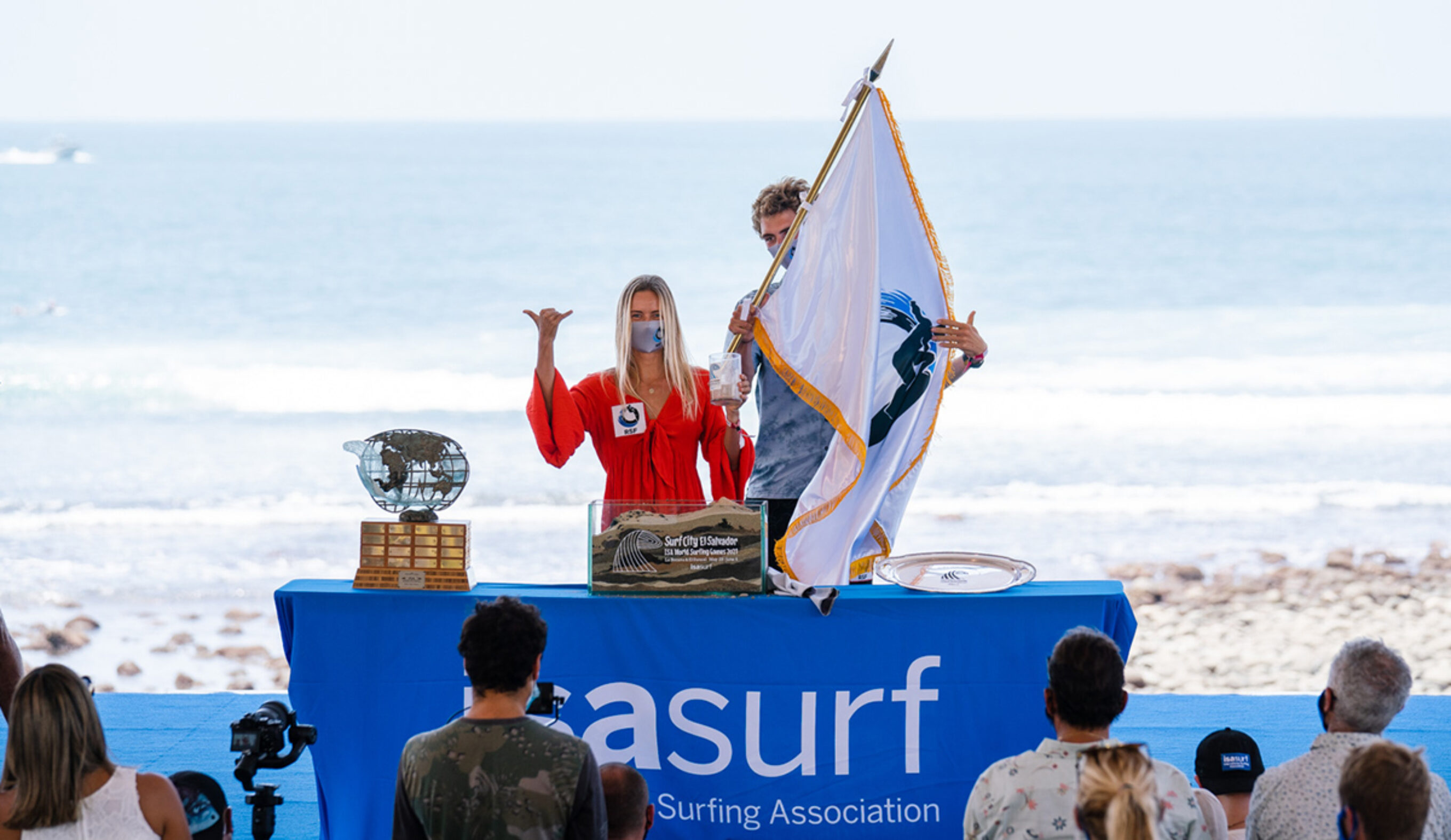
Russian surfer’s flew the Russian Surfing Federation flag at the opening ceremony of the 2021 World Surfing Games. Photo: Pablo Jimenez//ISA
The ISA still maintains the right to ban Russians from its events. But now, after the IOC’s change of heart, that could change.
According to Sergey Rasshivaev, who competed on Russia’s national team before the ban, the Russian federation will send a letter to the ISA in the coming days imploring the association to reconsider its position. He’s not optimistic that change will come in time for LA 2028.
“Maybe (we’ll get a chance) for the next Olympics, not for Los Angeles,” Rasshivaev told The Inertia on a phone call. “I don’t believe it will go so fast.”
“My personal opinion is that, because surfing (has not been a guaranteed) Olympic sport, always on the edge, the ISA doesn’t want to do anything that can affect them in the Olympics,” he added, “so they choose the safest way. Russia is not big in the surfing world, so who cares if Russia comes or not?”
Rasshivaev says the national competition structure is already in place to crown champions and send a team to the World Surfing Games in Peru in November if the ISA changes its stance.
Despite men not being able to leave the country under wartime laws, Ukraine has continued to compete in the Olympic qualifiers. While Ukrainian surfers have said that Russian surfers are their friends, they’ve also told us they have to be “held accountable” for the actions of their president.
We reached out to the president of Ukraine’s surfing federation, the ISA, and WSL to hear if their stances on Russians competing have changed after the IOC’s announcement, but have yet to hear back. If the ISA upholds its policy, the decision will be its own. There is no longer an IOC recommendation to lean on.