In the world of surfboards, a Ryan Lovelace shape is one of the most sought-after wave riding vehicles there is. He’s a bit of a Picasso, making strange and beautiful things. Unlike Picasso, however, people have recognized Lovelace’s genius while he’s still among the living.
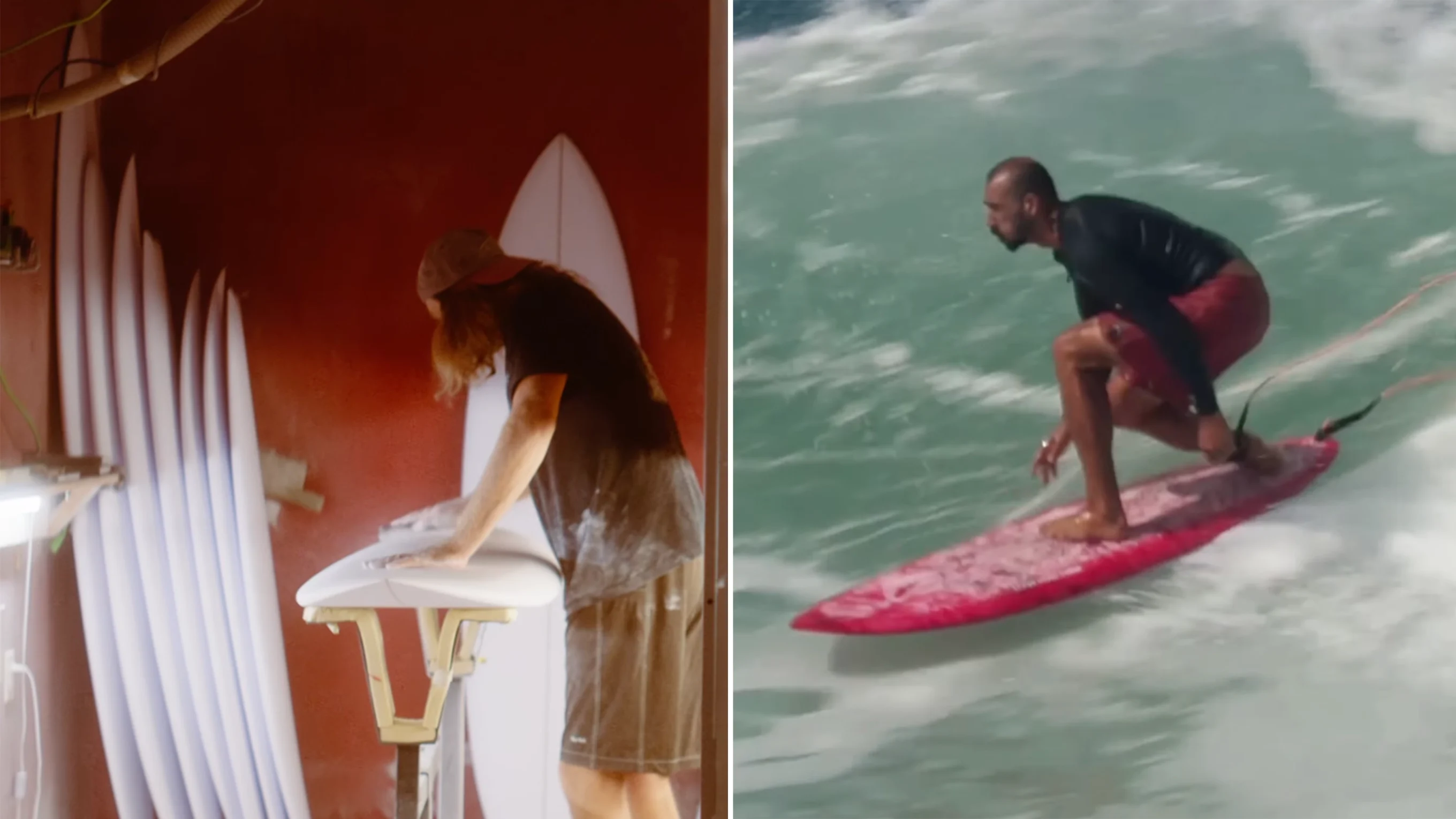
Lovelace makes some of the most beautiful and functional surfboards on the market today. He’s an artist as much as he is a laborer. His shapes are interesting and eye-catching. And most importantly, they work. They work really, really well. The latest creation from his brain is called the Plastron, and here Lovelace walks the viewer through what goes into it.
“If I can nail it down to one thing,” Lovelace says, “it’s auto-speed. Where this thing excels is how quickly it makes speed with doing absolutely nothing. Once you’re up, you’re f*cking generating speed.”
Making a surfboard that does everything well is a bit of a holy grail. Make speed, lose stability. Make stability, lose speed. Add drag, get control. Lose drag, lose control. The little things do big things, and it takes a good shaper to know just how much or how little to add or subtract. All that depends on the surfer, too, so when a shaper can consistently make surfboards that most surfers can agree are great surfboards… well, they’re a great shaper.
“Design-wise — what goes into it — it’s a pretty broad, flat deck,” Lovelace explains about the Plastron. “There’s a lot of volume in these things. They don’t carry all the way out to the rails. It’s still a generous rail — there’s not a handful — but there is volume there, but the volume really carries through the deck.”
The Plastron narrows fairly sharply into the nose, which is a bit different than many of Lovelace’s mid-length surfboards. But that’s (obviously) by design.
“What’s interesting and what I like so much about this outline is how the straightness and the width carries to your back foot,” Lovelace explains. “While you don’t have a bunch of width in the front, you do have width on your back foot. It just basically auto-levitates and creates lift and speed.”