
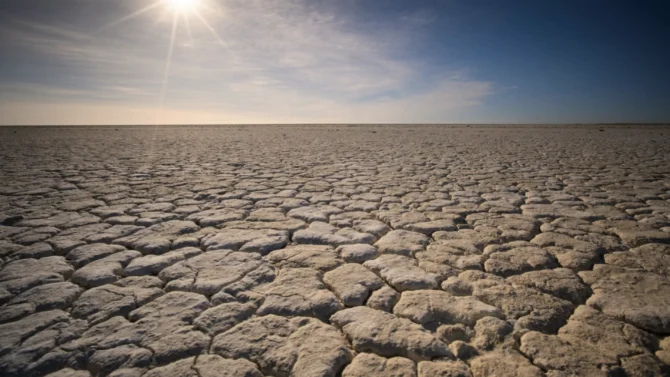
Africa will be hardest hit by El Niño’s grip. Photo: Unsplash

If you have been living under a rock with your eyes squeezed tightly shut and your ears full of cotton, you may not have heard about the growing super El Niño. It has already begun to break records, and it’s showing no signs of slowing down. That’s worrisome enough as it is, but a new report from the Chicago University’s Climate Impact Lab puts a terrifying number on the situation. Researchers believe that the massive El Niño could lead to nearly half a million deaths over the coming months.
“We have long been able to predict the impacts of temperatures on crops, and now we can predict their impact on the worst outcome – death. The result is that we now can estimate that 451,000 people may die in the coming months due to El Niño,” Michael Greenstone, a co-founder of the Climate Impact Lab, said in a statement. “This is such a large number that it can be numbing, but it is made up of parents and children, grandparents and neighbors, people going to work, caring for families, and living their lives.”
Attributing hard numbers — especially death tolls — to something as murky as a massive climate pattern that affects the weather all over the planet can be hard. There are myriad different ways people will be affected, from wildfires and floods to droughts and incredibly powerful storms fueled by warm waters. And, of course, the heat. The latter is what has researchers the most concerned. Africa, according to the report, will be the hardest hit.
“The 451,000 deaths projected to occur during the first nine months (June-February) of El Niño alone are about 65 times larger than the 6,800 people believed to be dead or missing from the recent Nepal flash flood,” the researchers wrote. “These El Niño heat deaths will be concentrated overwhelmingly in the Global South. Over just the next six months, the report projects 66,800 additional deaths across the Sahel in Africa, with nearly half of those lives being lost in Nigeria (31,400). Elsewhere in the region, Sudan will face 17,500 additional heat deaths, Niger will face 10,000, and Chad 8,000. In Southeast Asia, the extra heat is projected to cause an additional 19,400 deaths in the Philippines, Vietnam, Thailand, and Cambodia, and 19,300 deaths in Indonesia. India is projected to see 15,800 more deaths, while in South America, Brazil is most impacted with 13,300 deaths from El Niño’s heat.”
Those are projections, of course, but if the actual numbers come anywhere near them… well, that’s a lot of people dead.
El Niño, for those a little less in the know, is basically a climatological phenomenon that sees warmer-than-normal ocean temperatures in the eastern tropical Pacific Ocean. It can create a domino effect that plays a starring role in the world’s weather. The bigger the El Niño, the more destructive it will be. And this one is huge.
California recently declared a State of Emergency in preparation for its effects. Hurricane Polo intensified with terrifying speed after sucking up the warm waters it was running over. Government agencies around the world are sounding the alarm, telling the world’s residents to batten down the hatches.
The current El Niño event began in June, and since then it has gained steam. A lot of steam. By August, average ocean temperatures in the eastern Pacific were nearly 5°F above normal. The UK’s Met Office is saying “it is the strongest event in the observational record.” And it’s not even done gathering strength.
“We have been signaling for months that the developing El Niño will be an unprecedented event. The fact that it has already exceeded previous records – with several weeks to go before it peaks later this year – shows the enormity of this El Niño,” Professor Adam Scaife, Head of Long Range Prediction at the Met Office, said in a statement. “Scientists are still assessing whether the impacts will be in proportion to its magnitude, but we are already seeing expected effects worldwide.”

