Carlos Gauna retrieves his airborne drone with the quiet confidence of a master falconer. The rhythmic pulse of passing cars behind us is mildly disconcerting, but he doesn’t seem to mind. His hand is steady. He doesn’t flinch. He’s done this a thousand times.
The machine floats delicately into Gauna’s palm. A perfect catch. The graceful maneuver makes it easy to forget that he’s piloting the drone himself. “My drone never, ever touches the ground,” he says. The machine’s been in the air over the Pacific Ocean for roughly 30 minutes. Gauna is scanning for sharks. Upon retrieval, he swaps in a new drone battery with the precision of a marine field-stripping a firearm. “I can do all this in 20 seconds,” he says. In mere moments, Gauna’s drone is soaring over the ocean once more.
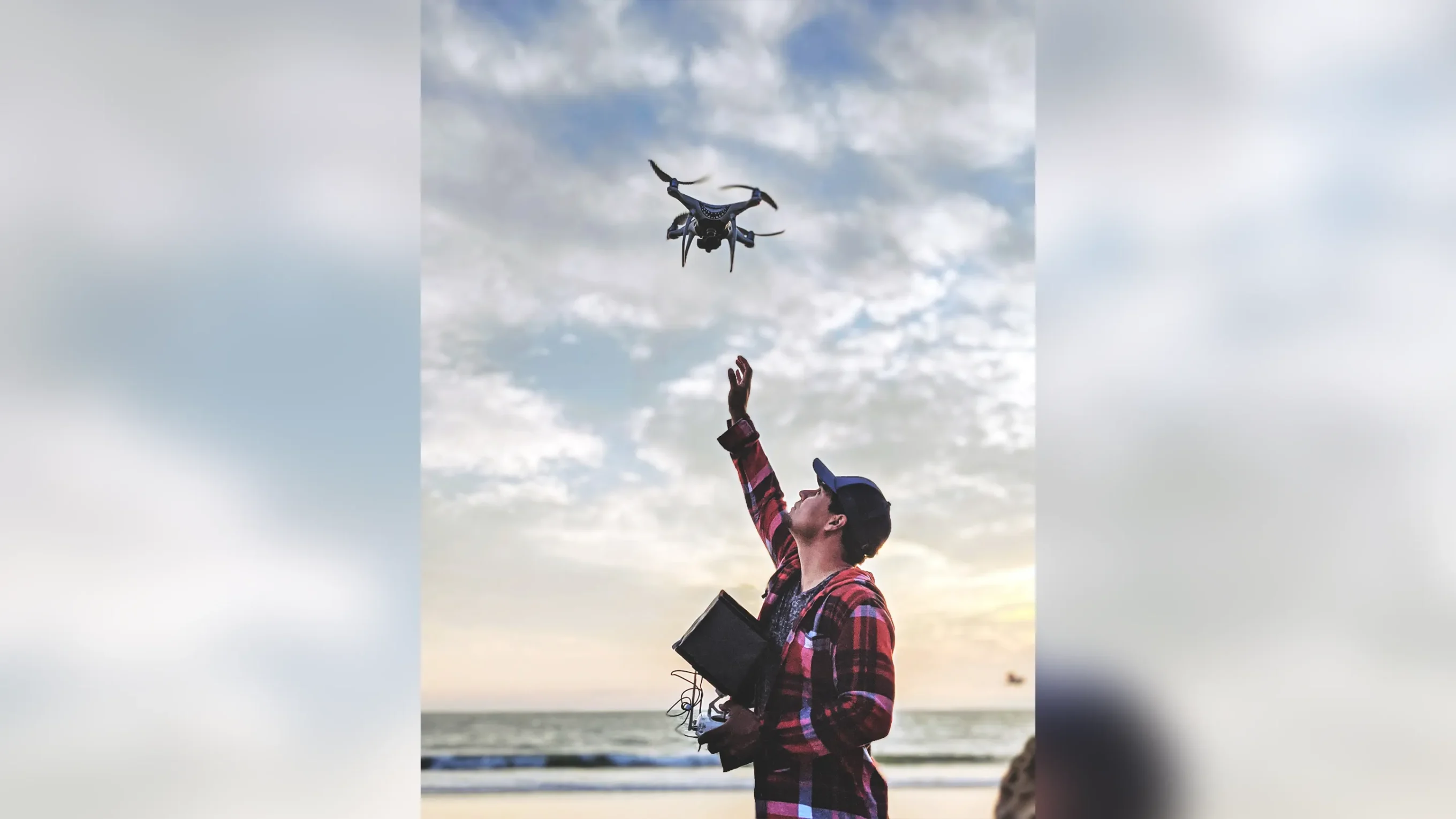
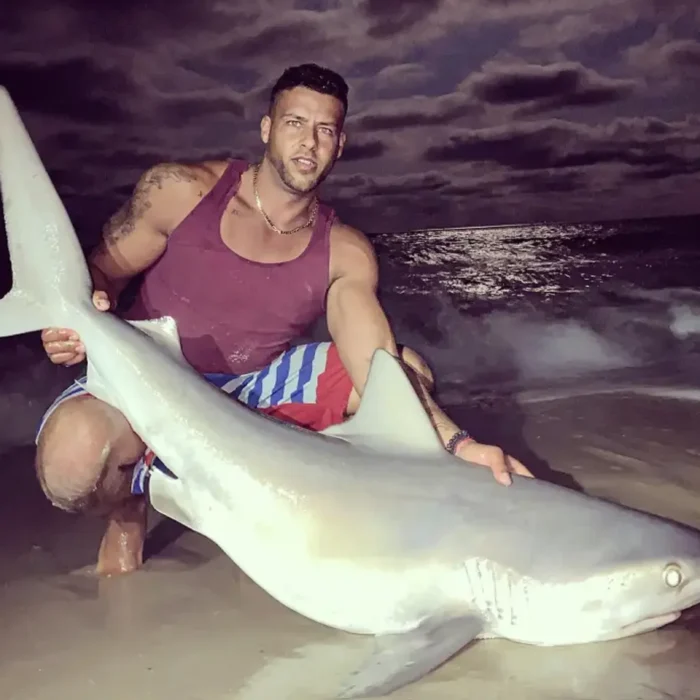
Perhaps better known by his online handle, TheMalibuArtist, Gauna is a self-described filmmaker and natural history storyteller. The shark footage he posts often goes viral. “Some people see me as a YouTuber, some people see me as a filmmaker,” he says, “but I think you can be a filmmaker, researcher, and storyteller all in one.”
Today, Gauna hopes to capture a breach. But the day’s conditions have complicated his search. “There’s massive surf today,” he explains. “Right where that wave is… man, those sets are way out there,” he says, “that’s kind of the breach zone. It’s kind of where [sharks] like to breach.”
We stand on a rocky patch of land between the PCH and the beach. Gauna’s car is parked on the shoulder of the highway. His trunk is open, revealing a neatly packed arsenal of batteries. “I would expect to find a shark here on the third battery,” he says. Gauna often measures time in batteries. “It’s very rare for me to go four or five batteries without a shark in summer.” He studies his monitor and asserts: “It’s going to be hard to find a shark.”
But Gauna is optimistic. He points out what he calls a vortex trail on his drone remote’s monitor. He takes his finger and traces the trail along the image of the ocean displayed onscreen. A shark has left a kind of underwater wake behind it, and Gauna is flying his drone right above the trail.
It’s been over six years since Gauna started posting marine wildlife content on Instagram and YouTube. In that time, he’s left his old corporate job, grown his Instagram followers to 275k, and developed partnerships with blue-chip nature documentary powerhouses. He’s shaped himself into a marine photography Swiss Army knife. He’s a skilled drone pilot with a strong mastery of cinematography, and a knack for knowing what to look for when it comes to locating sharks. “I don’t believe there’s anybody in the world that goes out and films sharks every single day as their job like this,” he says. The claim seems hyperbolic, but Gauna’s tone is calm and steady. He speaks about his work with unmistakable confidence. It’s hard not to see it his way, either. While plenty of wildlife photographers have made sharks their focus, and may or may not shoot daily, there aren’t many shark-focused aerial photographers who have developed bodies of work as vast, focused, and stylistically consistent as Gauna’s has been.
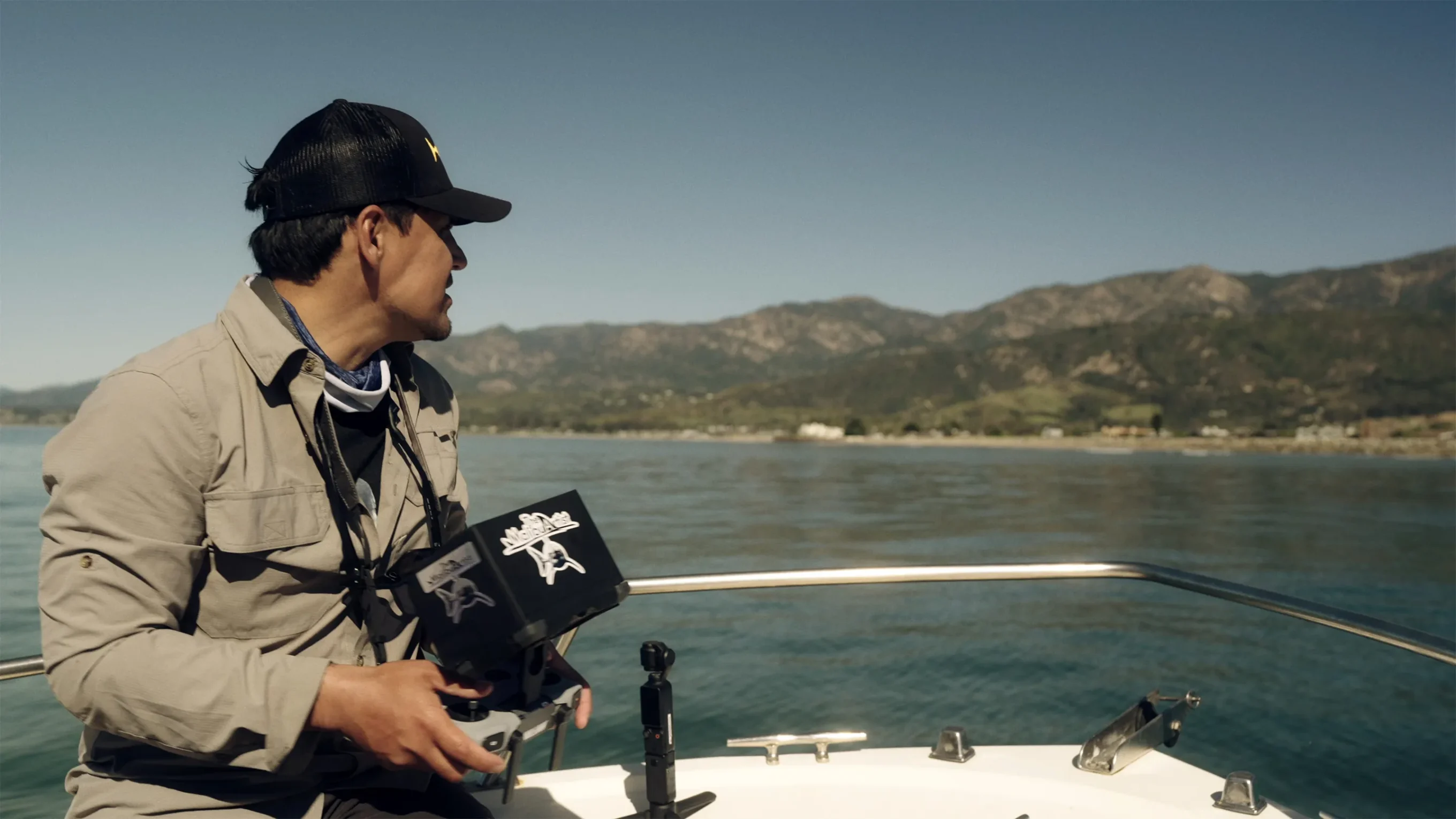
Gauna is also well positioned to make significant contributions to our understanding of shark behavior. In a 2021 TODAY video, biologist Chris Lowe details how Gauna’s work can help reshape the public’s perception of sharks. “We’re in and amongst [sharks] all the time,” Lowe says. “Carlos’ footage helps people see that. And they’re not seeing the gnashing teeth, they’re just seeing an animal casually swim by,” Lowe explains. In 2023, Gauna captured what is likely the first-ever sighting of a newborn great white in the wild.
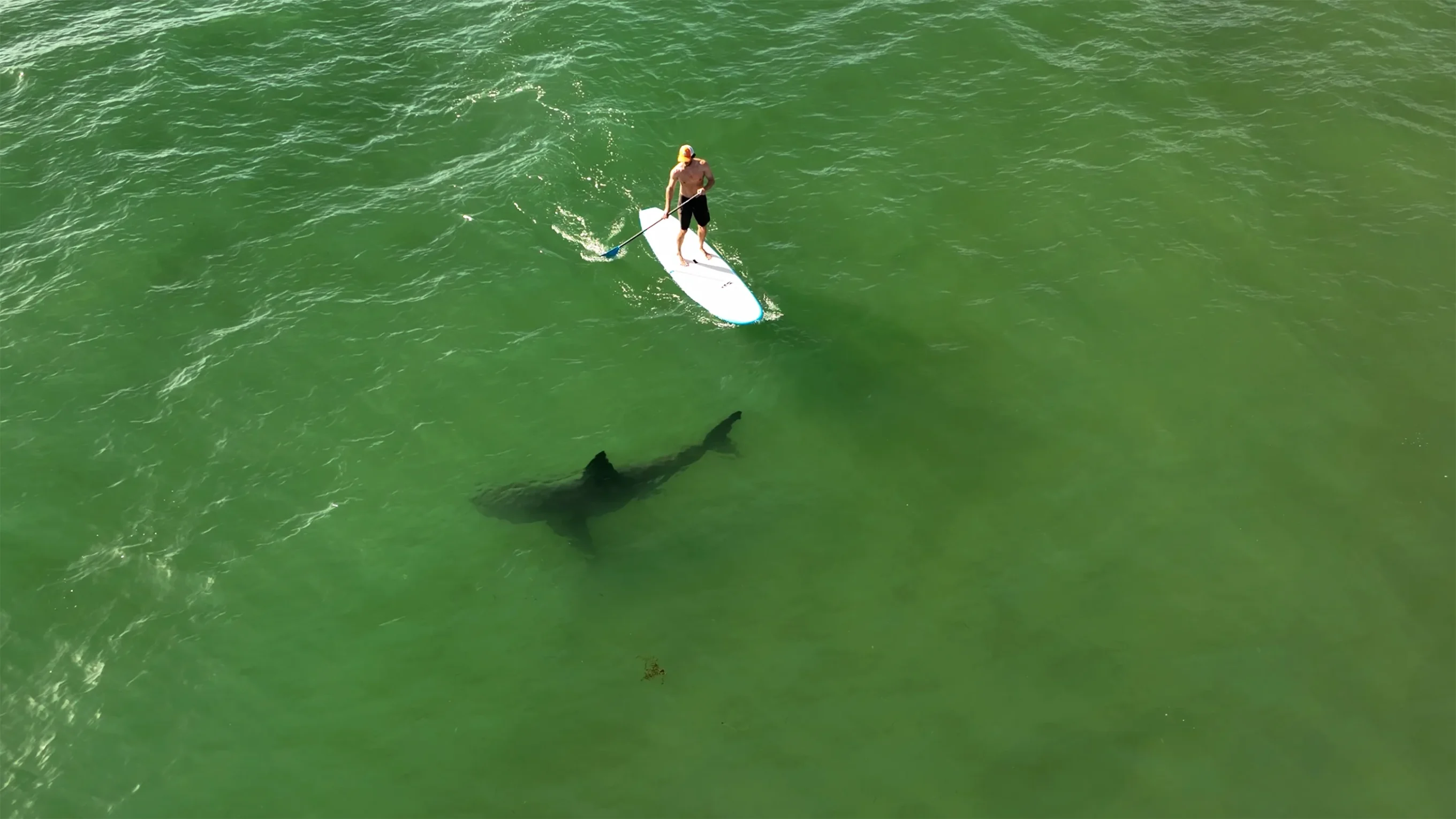
Suddenly, Gauna lights up with renewed focus and determination. “There we go,” he says, relieved. I peer over his shoulder at his monitor. He seems to be closing in on something. “That’s one hundred percent a great white,” he says, “we’re going to find a great white momentarily.” Before Gauna can finish his next sentence, he’s found it. The image on his monitor looks just like the footage featured all over his Instagram and YouTube pages, only now, it’s happening live. Gauna tracks the shark perfectly, keeping it in frame as it moves its body in a serpentine pattern. From our spot by the PCH, the animal is about 2,000 feet away.
The shark is clearly visible beneath the ocean’s surface. Gauna notes its speed, “the caudal fin is moving pretty fast back and forth,” he says, “see the frequency of it? So he’s traveling pretty good.” He thinks the shark is a juvenile. “It’s small, the head to the body proportions, the dorsal fins.” He doesn’t think it’s worth warning anyone about its presence, but he isn’t certain what the animal is up to, “I don’t know what this shark’s doing right now,” he says, “I would think he’s just cruising and catching some sun.”
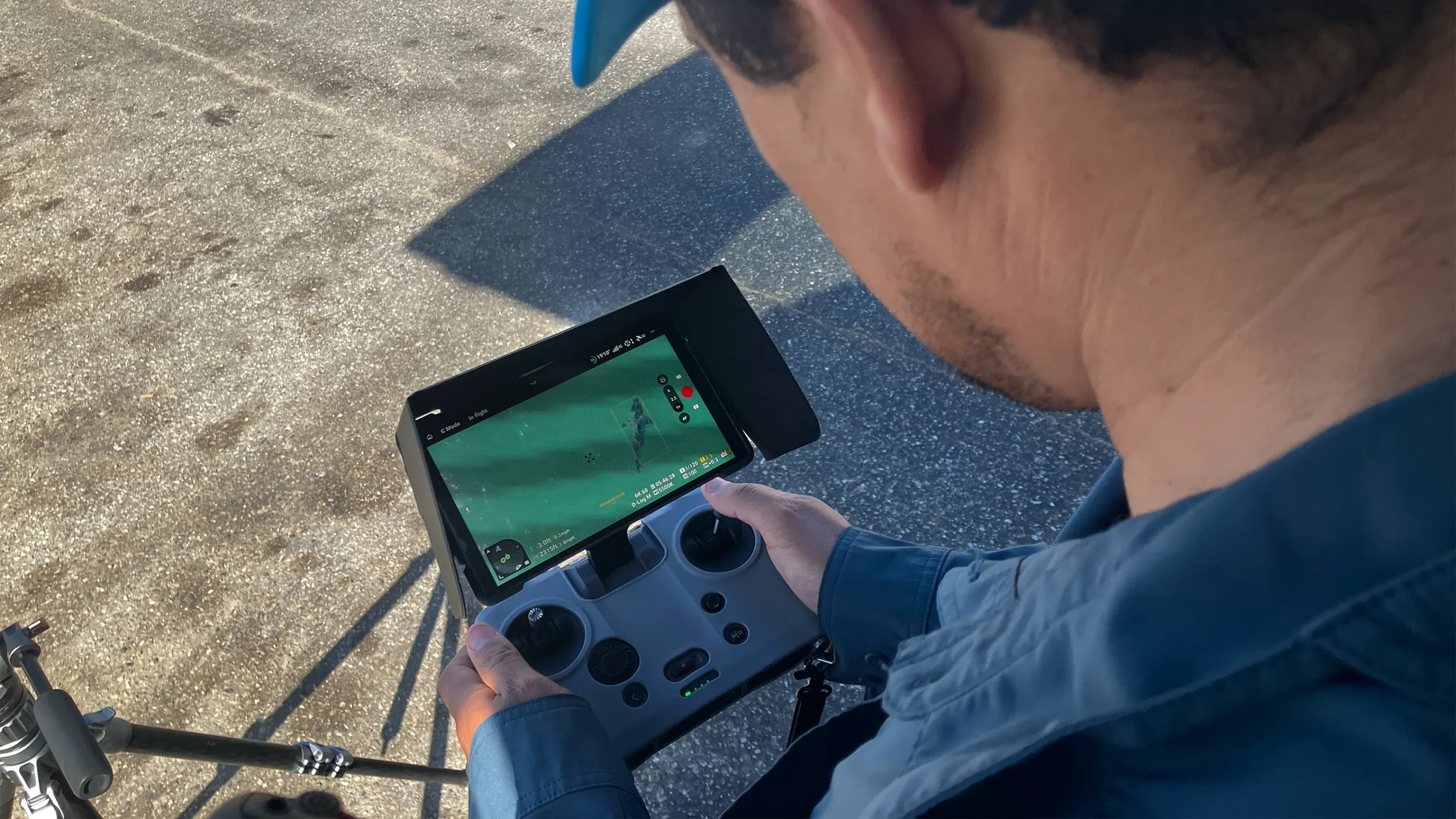
He pulls away from the animal, and then brings it back into frame slowly. Gauna is a thoughtful filmmaker. He works hard to create what can only be described as a kind of quiet suspense – not the shock and awe of a creature feature. His patient practice reminds you that his craft is an art form.
The moment is short-lived, though. A low-flying plane suddenly breaks Gauna’s concentration. The aircraft doesn’t have its ADS-B on, a system that alerts other aircrafts of its position and presence, and he’s concerned about it colliding with his drone. “I just want to make sure [the plane’s] not coming back,” he says. “I’m kind of more in safety mode here, just to make sure everything’s okay.”
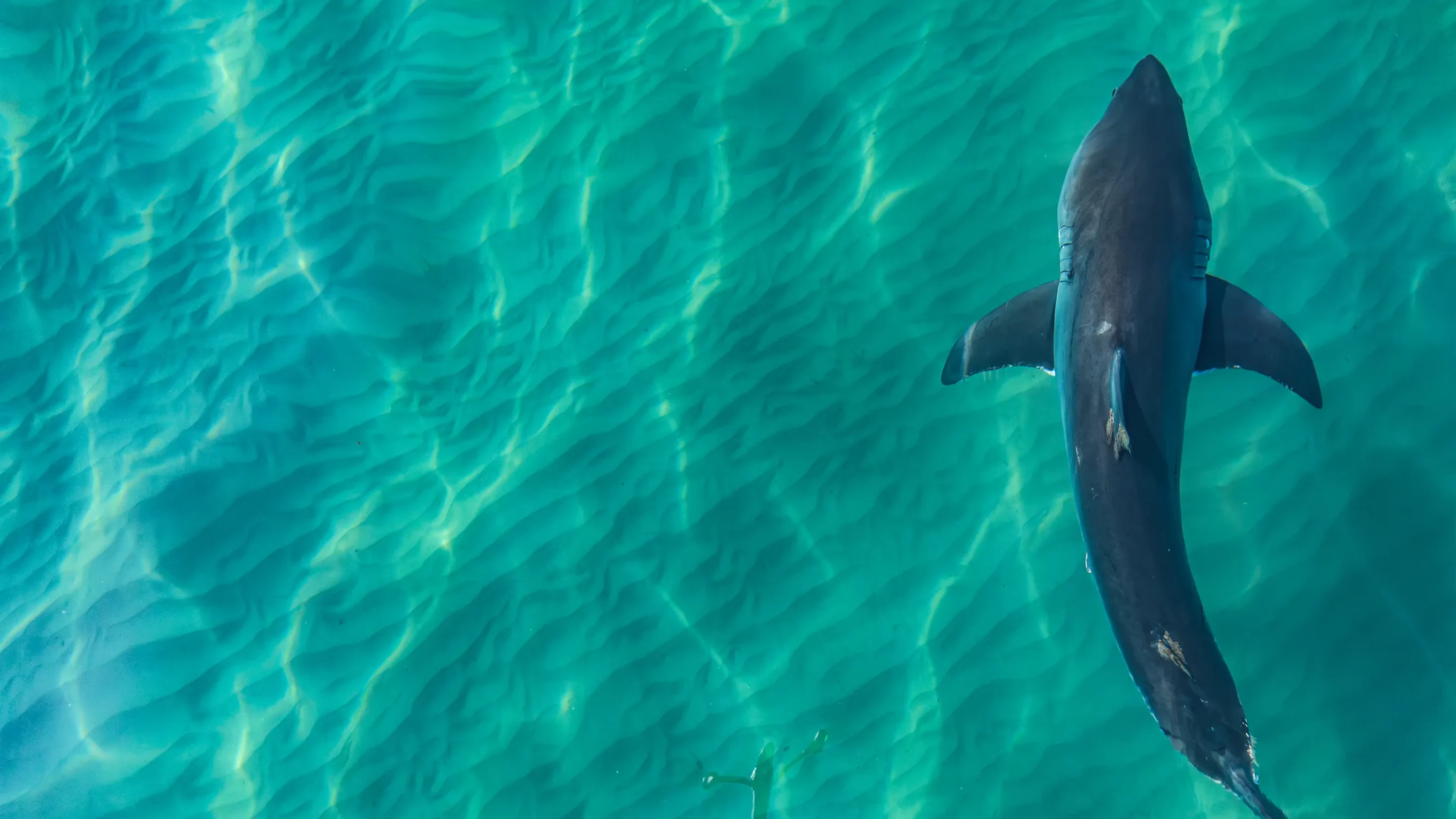
Meanwhile, the shark moves on. “But we know there’s sharks,” he says, “where there’s one, there’ll be more.”
We end the day with a quick trip north, toward Malibu First Point. Gauna wants to see if he can spot a whale shark. When we arrive, the lineup is crowded, and the Malibu Pier parking lot is peppered with passing surfers. “We have surfers passing us right now, and most of them probably have an idea that there’s sharks nearby,” Gauna says, “but it’s not until they actually see it from the air that you see how close they are to sharks, often.” Gauna says there’s never a zero percent chance of a shark attack, but he’s quick to point out that proximity doesn’t necessarily mean danger. “People are like ‘Oh, there’s a shark near a surfer, that surfer must be in danger.’ But what my footage overwhelmingly shows is that they’re not,” he says.
Gauna doesn’t spot any white sharks or whale sharks. But he gets excited when he spots a mysterious ray. “Oh boy, this is a good find,” he says, “Oh look at this, what we’ve found in Malibu.” He thinks the animal is out of place. “It’s the first time I’ve seen one here,” he explains, “If that’s a giant manta, that’s an oceanic tropical species that shouldn’t be here. We’re not in tropical waters.” While giant mantas are primarily an oceanic species, and are usually found in tropical and subtropical waters, they’re not restricted to them. According to NOAA, giant mantas have been found in water as cool as 19℃. They’ve likewise been observed in estuaries, oceanic inlets, and bays. NOAA classifies them as migratory, and a report from Reuters suggests that adults travel great distances. A Malibu sighting would be unusual, but not out of the question for the animal.
Gauna likewise wonders if the animal could be a devil ray. ABC7 recently reported sightings of sicklefin devil rays off Catalina Island. It’s difficult to get a clean shot, but the moment illustrates just how powerful Gauna’s observations can be. He speculates that El Niño may have something to do with the potential sighting. “We have El Niño this year,” he says, “combine that with the gradual warming of the ocean, and you’re seeing giant shifts in the ecosystem.” A recent NOAA report corroborates Gauna’s theory, describing unusually warm ocean temperatures and warm-water species sightings in Southern California.
We walk toward the Malibu Pier. I ask what, if anything, Gauna would want surfers to know about sharks. He doesn’t have to ponder long. “I think a lot of surfers don’t realize that we have big sharks in Southern California,” he says.
As far as next steps, and the footage Gauna hopes to score most, he’s certain of his answer. “Oh that’s an easy one… I want to film a [white shark] birth,” he says. “The actual birth. That’s never been filmed.” It’s easy to believe that he’ll be the first to film it, too.
You can follow Gauna on YouTube, Instagram, TikTok, and Facebook. His work is featured in Blue Planet III, which was released on November 1, 2026 in the United Kingdom, and will be released on January 23, 2027 in the United States.