A push to expand marine protections in Santa Cruz, California came to an end in October when the California Fish and Game Commission rejected proposals to limit fishing at Pleasure Point and Natural Bridges. As the dust settles after three years of debate, the decision has left local stakeholders divided — some celebrated the news, while others expressed disappointment.
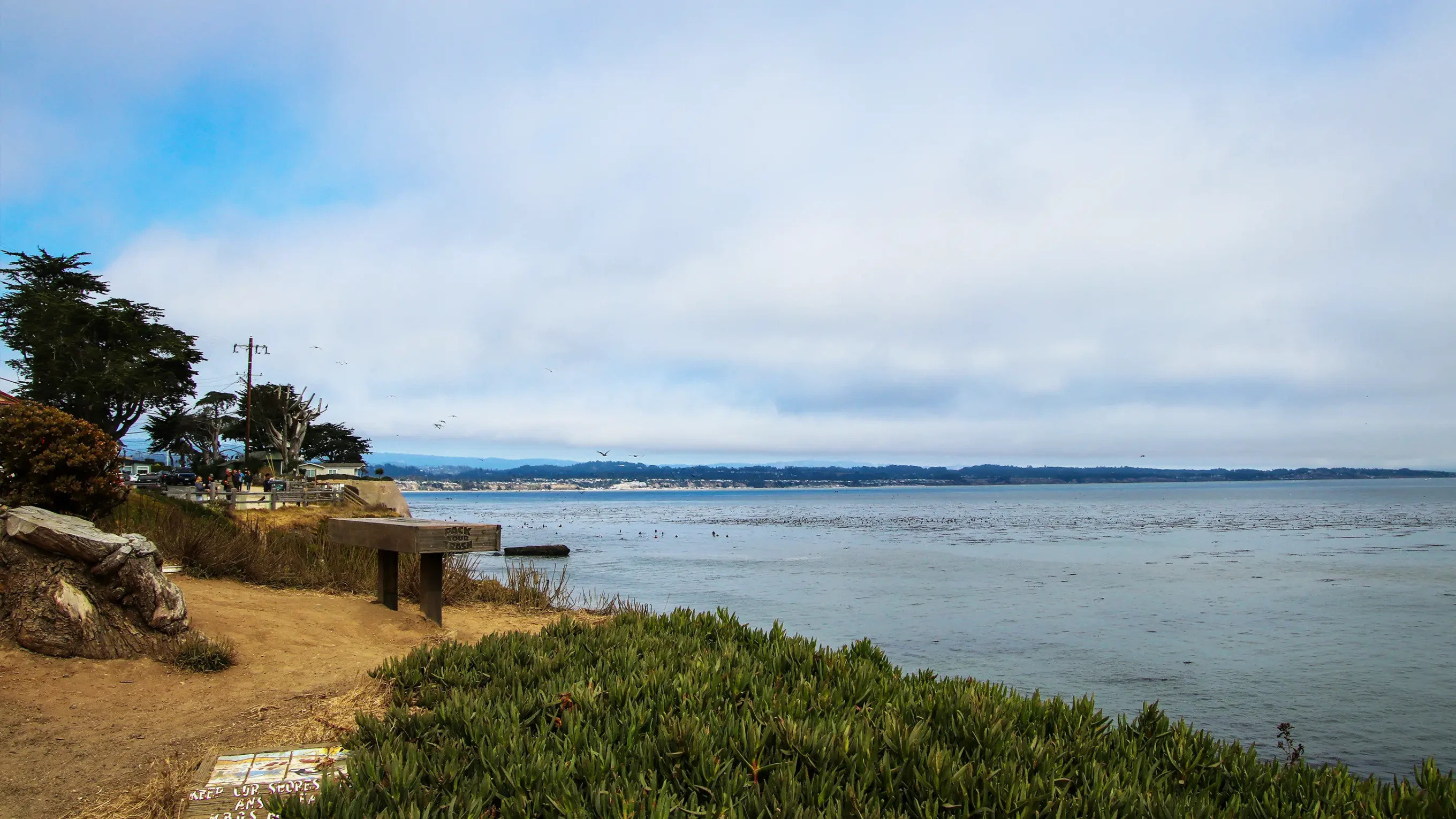
The state approved two new reserves in Carpinteria and Point Sal, but shot down most of the proposals under consideration, petitions spanning from Orange County to the Oregon border. Perhaps none drew as much public attention and online discourse as the plan to establish a new MPA at the popular Santa Cruz surf spot, Pleasure Point.
According to Matt Bond, the chief strategy officer at All Waters Protection and Access Coalition, fishermen are “stoked” with the outcome.
“I think we’re actually going to have a big party,” Bond said on a phone call.
In early 2024, All Waters joined prominent Santa Cruz surfers in a social media campaign to stop the Pleasure Point proposal. Elected officials, including then-Mayor Fred Keeley, also came out against the plan, arguing there was insufficient scientific evidence to warrant the creation of a 3.2-square-mile “no take” zone around Pleasure Point and the expansion of an existing MPA at Natural Bridges.
Local pro surfer Kyle Thiermann is among those enthused with the decision.
“I’m really grateful the Pleasure Point community will be able to share this unique resource with future generations,” Thiermann wrote in a text message. “The greatest risk to nature is distancing ourselves from nature.”
The conservation organizations Environment California and Azul introduced the petitions in November 2023 as part of California’s “30 by 30” initiative to protect 30 percent of land and coastal waters by 2030. In early 2026, the groups amended the proposal to allow non-motorized recreational fishing as a compromise.
But even with the concessions, the state rejected the proposal outright. Some residents, such as seabird biologist Hannah Nevins, felt let down by the decision.
Nevins, whose husband and sons are fishermen, believes a vocal minority of opponents dominated the conversation. She says the proposed protections had broad support among locals, including educators, docents, scientists, scholars, and even fishermen.
The debate, and the state’s assessment, focused largely on Pleasure Point’s healthy kelp forests as evidence that additional protections weren’t needed. But, according to Nevins, that didn’t account for other parts of the ecosystem that could benefit, such as seabirds and fish.
“Just because we don’t have the perfect data doesn’t mean we can’t make policy decisions based on what we know about how MPAs work, how beneficial they are to species, and the global track record with them,” Nevins said. “Sometimes you have to use the precautionary principle. I think it’s prudent to establish greater protections, (even if) a few people might be minorly inconvenienced.”
Nevins says climate variability, highlighted by extreme El Niño conditions on the California coast, further underscores the need for more protections.
“If not now, when are we going to start protecting these areas a little bit more so we don’t get to the crisis point where humans are really impacting the environment?” Nevins said.
While Bond acknowledged the petitioners are good people with “different ideals,” he disagrees that precautionary action is a valid way to cut off access to fishing in this case.
“Both the Ocean Protection Council and the Department of Fish and Wildlife agreed that (the Santa Cruz proposals) wouldn’t accomplish what the petitioners stated it would, and they would have probably undue socioeconomic impact,” Bond said. “Both of those guiding bodies said, ‘Let’s deny that one,’ and the commission followed through.”
As far as Nevins knows, there are no immediate plans to revive the push for a Pleasure Point MPA. But she’s hopeful it gets new life in the future, with more stakeholder working groups to create buy-in.
“I think we need to advocate for more protections,” Nevins said. “It’s just the writing on the wall that our ecosystems are under a lot of pressure. The more we can protect now, the greater resilience they’ll have in the future.”
After three years of uncertainty, Pleasure Point remains open for fishing. But the debate over how to best manage the area, and the lingering friction between locals, are unlikely to disappear.