
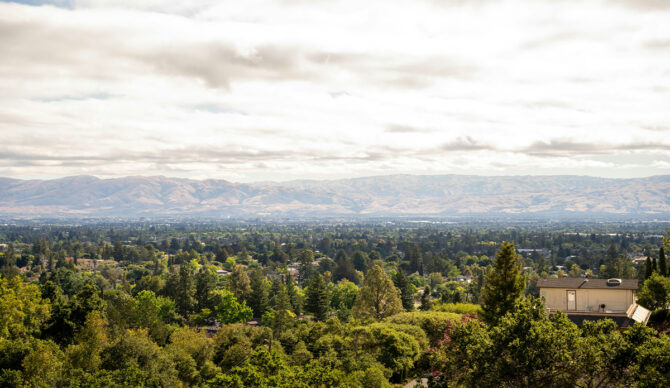
California’s Bay Area hasn’t had a major earthquake in 120 years. Photo: Marnee Wohlfert//Unsplash

A violent earthquake hasn’t shaken the San Francisco Bay Area since 1989. However, new research suggests that another strong quake on the San Andreas Fault could strike the region sooner than scientists had imagined.
The San Francisco Chronicle reported on the soon-to-be-published geology research by San Jose State professor Kim Blisniuk. She observed data that shows a section of the San Andreas Fault that runs through the Santa Cruz Mountains, south of San Francisco, could be moving faster than scientists previously believed, which would make the fault more conducive to earthquakes.
“In general faults with higher slip rates will have more frequent earthquakes and a probability of one,” Blisniuk told the Chronicle. “High slip rates faults generally have higher magnitude earthquakes due to potentially higher stress accumulation being released during an earthquake.”
The 1906 earthquake that notoriously burned much of San Francisco is believed to have been a 7.8 on the Richter Scale. Since then, strong quakes have occurred around the portion of the San Andreas Fault, such as the 6.9 Loma Prieta quake that hit the Santa Cruz Mountains during the 1989 World Series. However, no quake has matched the power of 1906.
In June, scientists from the University of Hawaii published research that found the southern portion of the fault northeast of Los Angeles is experiencing stress levels not seen in 1,000 years. While the Bay Area hasn’t seen a major earthquake in decades, the fault around Cajon Pass hasn’t experienced a major quake in 160 years.

