
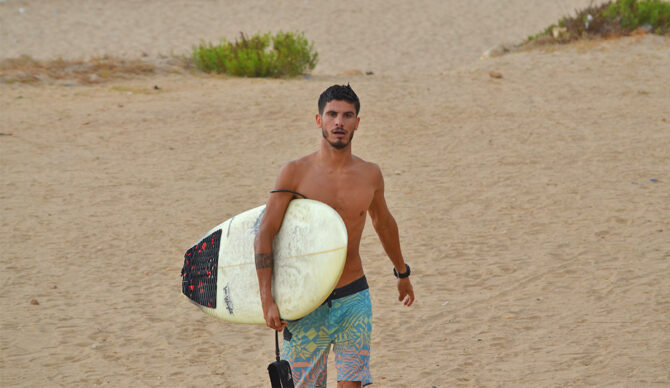
After 14 years as a refugee, Ali Kassem is home. And he brought his surfboard with him. Photo: Courtesy Ali Kassem

Ali Kassem spent 14 years as a refugee outside of his native Syria. When civil war broke out in 2011 and claimed his brother’s life, he left the country for neighboring Lebanon at 16 years old to forge a new life.
While in Lebanon, he picked up a hobby that developed into a passion: surfing. Now, as Syria transitions toward normalcy after the government was toppled in late 2024, Kassem has returned home with his family.
He had never lived in Syria as an adult, let alone surfed the country’s coast. But he’s been on a surf exploration tour since coming home eight months ago, scouring the coast for the best spots. He found what he says is a perfect wave in the city of Tartus to open the country’s first surf school, Surf Syria.
As of now, Kassem says he and his cousin are the only two surfers in the country. While surfing is still new, he’s convinced there’s an untapped desire to learn.
“Syrians are so open — they love life, and now they have a chance to live,” Kassem said. “After 14 years of war, they want something new. So I’m sure the surf school will be for both Syrians and visitors.”
View this post on Instagram
While the rest of Kassem’s family has moved to the inland city of Idlib, he’s been living in his truck on the coast. Between barreling reefs that harness the Mediterranean’s winter swells and mellow longboard waves apt for learning, he’s found a trove of possibilities. He said he plans to sort out his business status with the government and make the surf school mobile, relocating as conditions change.
“I can park anywhere and teach,” Kassem said. “This way, I can get more students, and the sport will grow faster. The wave in Tartus works well. It’s perfect now.”
When assimilating to life in Lebanon, Kassem fell in with a group of surfers at Jiyeh Beach south of Beirut. He learned the sport, excelled at it, and began teaching with the local surf school. Later, he was invited to visit France to become certified in teaching surfers with disabilities.
His story didn’t go unnoticed. Media wrote about the Syrian surfing refugee in Lebanon, and the United Nations Refugee Agency published a profile about him in 2017. He says CNN has already caught wind of his project in Syria and has sent journalists to document his story.
Kassem’s return to Syria is not just an inspirational tale. He called it the “hardest decision of (his) life.” When he lost his job and ran into issues with his temporary resident status in Lebanon, the immigration troubles forced his hand.
“When I came back to Syria, I had nothing,” he said.
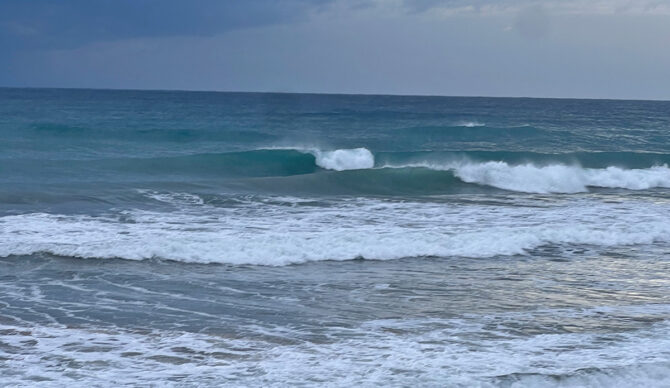
Empty lineups abound in Syria. Photo: Ali Kassem
He understands that visitors may be hesitant to visit his country — and try surfing, of all things — after years of violence and suppression. But he insists it’s safe.
“The situation is perfect now,” Kassem said. “There are a lot of people on the beach. There are parties. People are living safely and happier now. There are a lot of visitors, too.”
Syria’s government is still fragile. And while Kassem is living what many Westerners would consider surfing’s ultimate dream with empty lineups and open roads, he says there’s a practicality to nurturing a wave-riding culture. The sport could provide a positive injection of joy and tourism revenue into a population that is struggling to grapple with the trauma of war.
For now, Kassem and his cousin will be surfing the country’s swells on their own, but he hopes others join him soon.
“I believe that surfing can connect people, and it can change a lot for tourism,” Kassem said. “Surfing can make people happier, calmer. I’m sure it’s going to change a lot in the lives of Syrians.”

